
Rollers are one of the most underestimated components in a sheeting line.
Attention is usually placed on cutting units, motors, and control systems, while rollers are expected to “just work.”
In reality, rollers directly affect how paper moves through the machine.
When their condition is not stable, problems appear gradually—often without being immediately traced back to the rollers themselves.
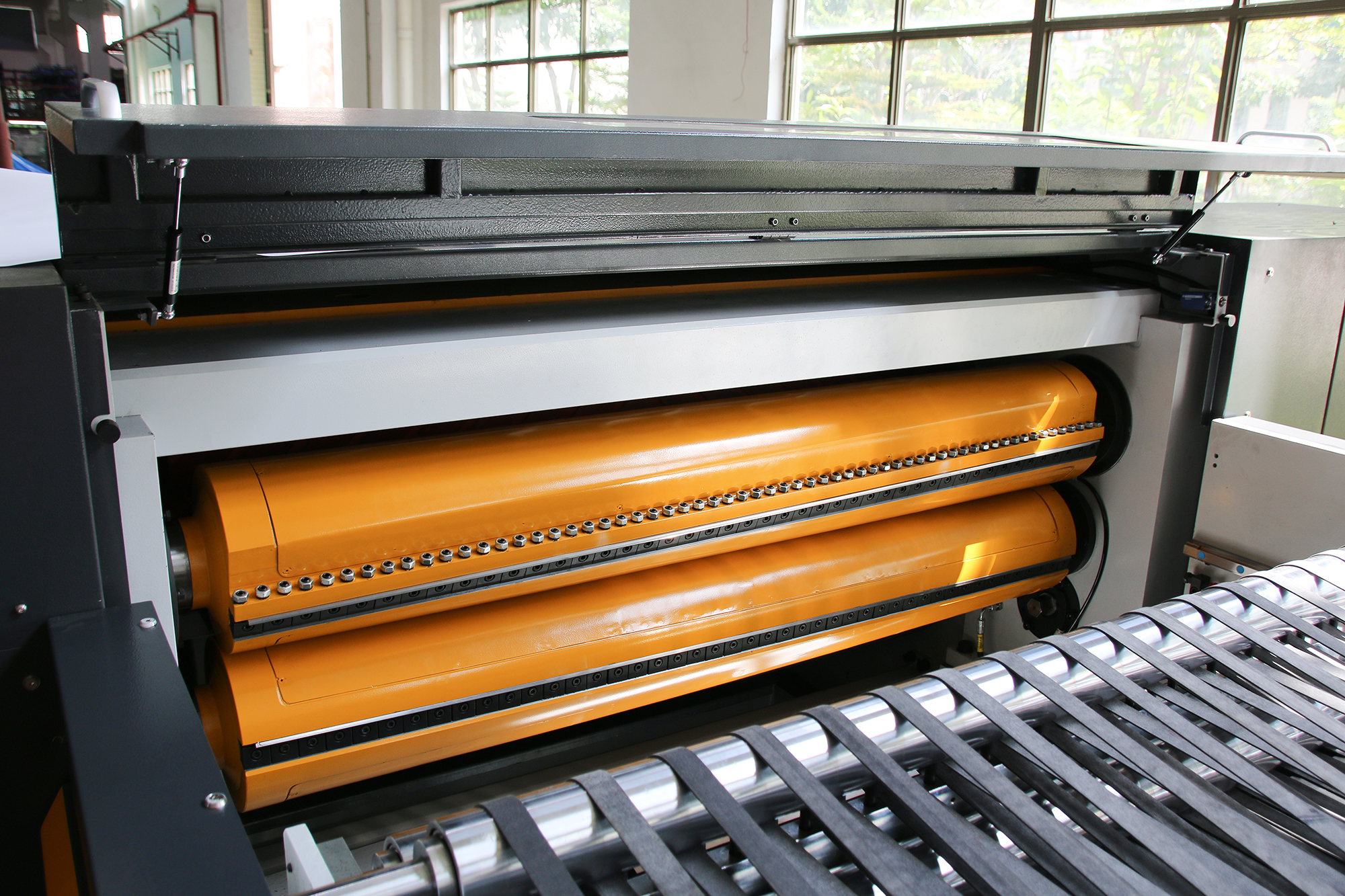
Why Rollers Matter More Than Expected
Every stage of the process depends on controlled paper movement.
Rollers are responsible for:
- feeding the paper forward
- maintaining traction
- supporting stable tension
- guiding the web through different sections
If any of these functions become inconsistent, the impact will show up in product quality.
Common Roller-Related Issues
1. Surface Wear
Over time, roller surfaces lose their original friction characteristics.
When grip decreases:
- paper may slip slightly during transport
- feed accuracy becomes inconsistent
- sheet length may begin to vary
This issue often develops slowly, making it difficult to detect early.
2. Contamination Build-Up
Dust, paper fibers, coating residue, or adhesive can accumulate on roller surfaces.
This leads to:
- uneven contact across the roller width
- inconsistent feeding force
- localized slipping or drag
In some cases, contamination creates small but repeated disturbances in paper movement.
3. Misalignment
Even a slight deviation in roller alignment can affect web behavior.
If rollers are not parallel:
- the paper may drift to one side
- tension becomes uneven across the width
- edge quality and cutting position are affected
These problems are often mistaken for guiding or tension issues, while the root cause lies in mechanical alignment.
Why These Problems Are Often Overlooked
Roller-related issues rarely cause immediate failure.
Instead, they introduce small variations into the process.
Operators may respond by adjusting tension, guiding, or speed, without realizing that the underlying problem remains.
This leads to repeated corrections without long-term improvement.
Impact on Final Product Quality
When roller condition is not consistent:
- sheet length accuracy becomes unstable
- wrinkles or waviness may appear
- edge alignment can drift
- stacking quality may decline
These effects are cumulative and become more visible during long production runs.
Maintaining Stable Roller Performance
To avoid these issues, roller condition should be part of routine maintenance rather than occasional inspection.
Key practices include:
- regular cleaning to remove dust and residue
- checking surface wear and replacing when necessary
- verifying alignment across the full width
- monitoring feeding consistency during operation
Consistent maintenance helps prevent gradual quality loss.
Conclusion
Rollers may seem like simple mechanical parts, but they play a critical role in process stability.
Small issues—wear, contamination, or misalignment—can lead to noticeable quality problems over time.
Maintaining roller condition is not just maintenance work; it is a necessary step to ensure stable feeding, consistent tension, and reliable cutting results.