
Thin paper is one of the most difficult materials to run in a sheeting line.
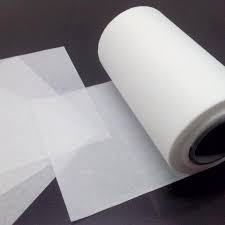
Grades such as 28–60 gsm Bible paper, release paper, or silicone-coated paper react quickly to even small changes in force or handling.
Unlike heavier grades, thin paper has very low stiffness.
This means it cannot absorb fluctuations in tension or transport.
Any instability in the process will show up immediately as wrinkles, waves, or even web breaks.
Why Thin Paper Is So Sensitive
In real production, thin paper behaves differently for three main reasons:
- it stretches easily under tension
- it has limited resistance to compression or bending
- surface coatings (in some grades) reduce friction consistency
Because of this, settings that work for normal paper often cause problems when applied to thin materials.
Three Key Controls That Cannot Be Ignored
From practical operation experience, stable thin paper processing depends on three critical conditions.
1. Low and Stable Tension
Thin paper does not tolerate sudden force changes.
If tension is too high or fluctuates:
- wrinkles form quickly across the web
- edges may tighten unevenly
- web breaks become more likely
The goal is not just low tension, but consistent tension throughout the run.
This includes compensating for roll diameter changes and avoiding sudden acceleration or deceleration.
2. Balanced and Gentle Edge Guiding
Guiding systems must correct position without pulling the web.
If guiding force is uneven or too aggressive:
- one side of the paper becomes tighter than the other
- diagonal wrinkles or distortion may appear
- feeding into the cutting section becomes unstable
For thin paper, guiding should be precise but smooth, maintaining alignment without introducing stress.
3. Smooth Transport Through the Line
The entire paper path must support stable movement.
Common issues include:
- worn or rough rollers that increase friction
- uneven conveyor speeds between sections
- sudden changes in transport direction
These factors can cause the paper to catch, shift, or compress, leading to visible defects.
A clean, well-maintained, and synchronized transport system is essential.

Additional Factors in Real Production
Beyond the main controls, several practical details also affect performance:
- environmental humidity changes can alter paper behavior
- static electricity may increase handling difficulty
- improper setup during roll loading can introduce initial instability
Operators often notice that thin paper runs well at first, then becomes unstable.
This is usually due to gradual changes in one of these conditions rather than a single fault.
What Stable Thin Paper Production Looks Like
When the process is properly controlled:
- the web remains flat and stable throughout the line
- wrinkles do not appear even during long runs
- cutting and stacking remain consistent
- operator intervention is minimal
Importantly, stability allows the line to run at practical production speeds without sacrificing quality.
Conclusion
Thin paper cannot be handled with standard settings or rough control.
It requires a stable, balanced process where tension, guiding, and transport are all carefully managed.
When these conditions are met, even sensitive materials can be processed reliably, with fewer defects and more predictable output.