Archives May 2026

What Really Limits Your Daily Production Capacity

When daily output falls short, the first reaction in many factories is to question the sheeter.
Speed settings are checked, operators try to run faster, and adjustments are made on the main machine.

In practice, however, the sheeter is rarely the true bottleneck—especially in lines that are already capable of high-speed operation.
What limits capacity is usually everything that happens after the sheets are cut.

Why the Sheeter Is Often Not the Problem

Modern sheeters are designed to run at stable, high speeds under normal conditions.
If the downstream process cannot keep up, the sheeter is forced to slow down or stop intermittently.

This creates a false impression that the machine itself is underperforming, when in fact it is being constrained by the rest of the line.

Three Common Capacity Limiters

  1. Packing Cannot Match Output
    Packing is one of the most frequent bottlenecks.

If wrapping, counting, or sealing is slower than cutting:

  • finished sheets begin to accumulate
  • operators must pause upstream production
  • temporary storage or manual handling increases

Even small mismatches in speed between cutting and packing will reduce total daily output.

  1. Unstable or Inefficient Stacking
    Stacking issues do not always stop the line, but they reduce effective speed.

When stacking is inconsistent:

  • operators intervene to correct alignment
  • stacks need to be reworked before packing
  • machine speed is reduced to maintain acceptable quality

Over time, these small slowdowns add up to a significant loss in capacity.

  1. Material Handling Delays
    Handling of rolls, pallets, and finished goods is often overlooked.
  • Typical delays include:
  • slow roll loading or changeover
  • manual pallet replacement

congestion in moving finished products out of the line

These interruptions may seem minor, but they directly reduce available production time.

The Hidden Impact of Small Losses

None of these issues alone may appear critical.
However, when combined across a full shift:

  • short stops accumulate
  • machine utilization drops
  • actual output falls well below theoretical capacity

This is why some lines running all day still produce less than expected.

What Improves Real Capacity

Increasing daily output is not only about increasing speed.
It requires balancing the entire process so that each section supports continuous flow.

In a well-coordinated line:

  • cutting, stacking, and packing operate at matched speeds
  • material handling is smooth and predictable
  • interruptions are minimized

The result is higher effective production without overloading any single machine.

Practical Outcome

When bottlenecks are addressed across the full line:

  • production runs longer without interruption
  • output becomes more predictable
  • operator workload is reduced
  • overall efficiency improves without pushing equipment to its limits

Conclusion

If your daily production capacity is lower than expected, the cause is rarely just the sheeter.
The real constraints are usually found in packing, stacking, and material handling.

Improving capacity requires looking at the entire workflow, not just the main machine.
When the line is balanced, output increases naturally and sustainably.

How to Run Thin Paper Without Wrinkles | Practical Experience

If you’ve ever run thin paper on a sheeting line, you know it’s a pain. Especially stuff like 28 to 60 gsm Bible paper, release liner, or silicone-coated grades. Even a tiny change in tension or a slight bump in handling – and it goes crazy.

Unlike thick paper, thin paper has almost no stiffness. So it can’t absorb any tension changes or transport fluctuations. Any small instability gives you wrinkles, waves, or a web break right away.

Why is it so touchy? Three real-world reasons:

  • It stretches easily under tension.
  • It can’t handle compression or bending.
  • Coatings like silicone make friction uneven.

That’s why settings that work fine for regular paper often fail on thin stock.

From running this stuff day to day, three things matter most if you want it to run stable.

First, keep tension low and steady. Thin paper hates sudden force changes. Too high or fluctuating tension – you get wrinkles across the web, uneven edges, or breaks. The trick isn’t just low tension. It’s steady tension. That means compensating for roll diameter changes, and no hard accelerating or decelerating.

Second, guide it gently. The edge guide has to correct position without pulling on the web. If the guiding force is uneven or too aggressive, one side gets tighter than the other. That gives you diagonal wrinkles or distortion, and the feeding into the cut-off gets unstable. With thin paper, you want precise but smooth guiding – keep alignment without adding stress.

Third, make sure the whole transport path is smooth. Worn or rough rollers will cause problems. So will mismatched speeds between sections, or sudden direction changes. The paper can catch, shift, or compress, and you see visible defects. A clean, well-maintained, synchronized system is not optional.

Beyond those main things, a few practical details also mess with thin paper:

  • Humidity changes affect how the paper behaves.
  • Static electricity makes handling harder.
  • Bad setup when loading the roll can introduce instability from the start.

Sometimes operators see thin paper run fine at first, then start acting up later. Usually it’s not one big fault – just a gradual drift in one of those conditions.

When you get it right, what does stable production look like? The web stays flat and stable all the way. No wrinkles even on long runs. Cutting and stacking are consistent. The operator barely has to touch anything. And you can run at real production speeds without losing quality.

Bottom line – thin paper isn’t like regular paper. You can’t just use standard settings and rough control. You need a stable, balanced process where tension, guiding, and transport are all carefully managed.

Get those right, and it’ll run.

Why Your Line Looks Busy but Output Is Low | Practical Analysis

It’s common to see a production line running all day with operators constantly moving, adjusting, and handling materials.
On the surface, everything looks active. But when you check the actual output, the numbers don’t match the effort.

This gap between activity and real productivity is a frequent issue in paper converting plants.

Pallet truck for transporting roll paper

Activity Does Not Equal Output

A line can be “busy” for many reasons that don’t contribute to finished product.
Operators may be:

  • moving stacks between sections
  • correcting alignment issues
  • waiting for the next step to catch up
  • handling small interruptions

All of this creates motion, but not necessarily usable output.

Where Efficiency Is Actually Lost

Based on practical production observations, low output in a busy line usually comes from three areas.

1. Excessive Manual Handling
When too many steps depend on manual work, speed becomes limited by people rather than machines.

Typical examples include:

  • manual counting and sorting
  • repositioning stacks
  • repeated adjustments between processes

Even if each step only takes a short time, the cumulative effect reduces overall throughput.

2. Unbalanced Workflow Layout
Layout design directly affects how materials move through the factory.

If the process is not well arranged:

  • raw materials travel longer distances than necessary
  • semi-finished products are temporarily stored and moved again
  • finished goods require additional handling before shipment

These extra movements do not add value but consume time and labor.

3. Frequent Small Interruptions
Short stops are often overlooked because they seem minor.

In reality, they are one of the biggest sources of lost efficiency.
These include:

  • minor jams
  • repeated parameter adjustments
  • sample checks and corrections
  • coordination delays between sections

Individually, each stop may last only a few minutes. Over a full shift, they significantly reduce effective production time.

Why the Problem Persists

Many operations try to solve these issues by adding more operators or increasing machine speed.
In most cases, this does not improve output.

If the process itself is not smooth, increasing speed only creates more instability, and adding labor increases complexity without fixing the root cause.

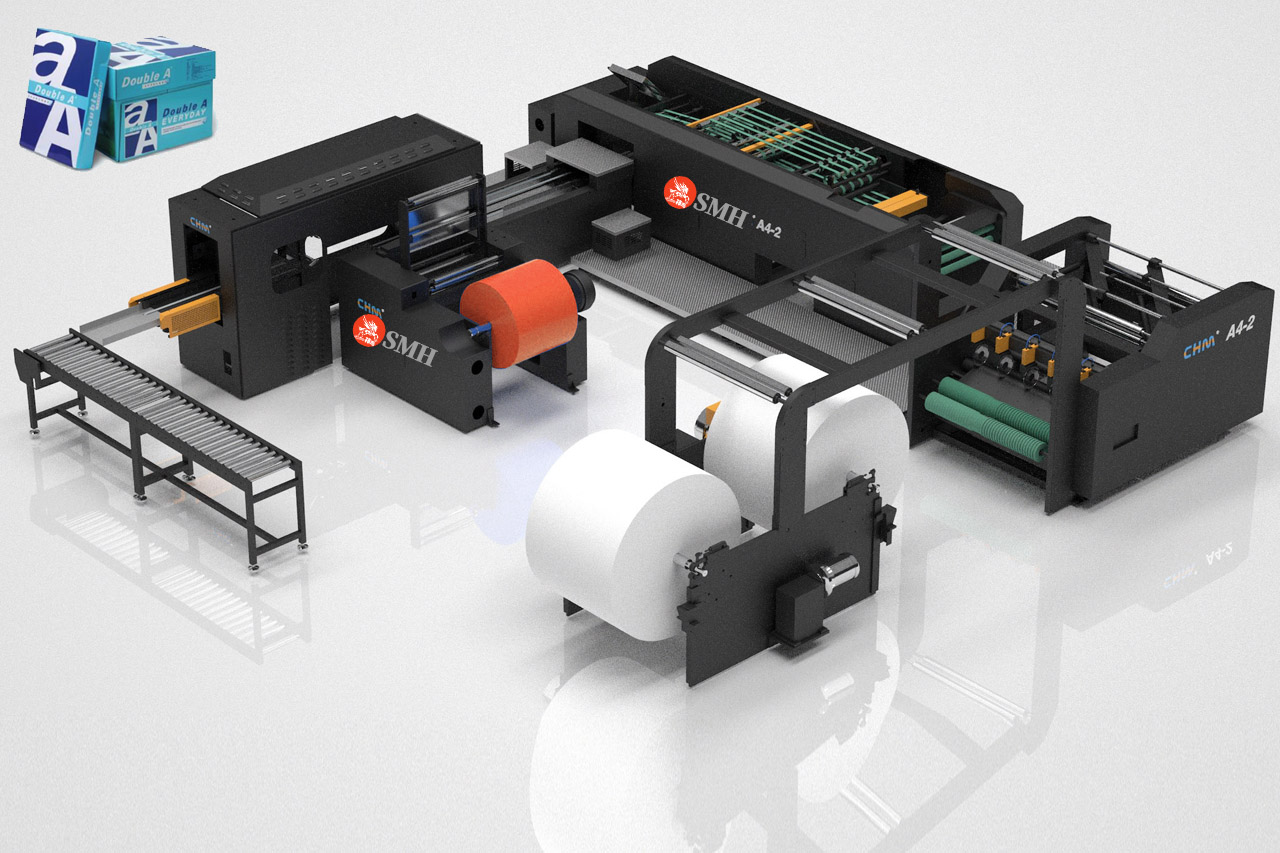
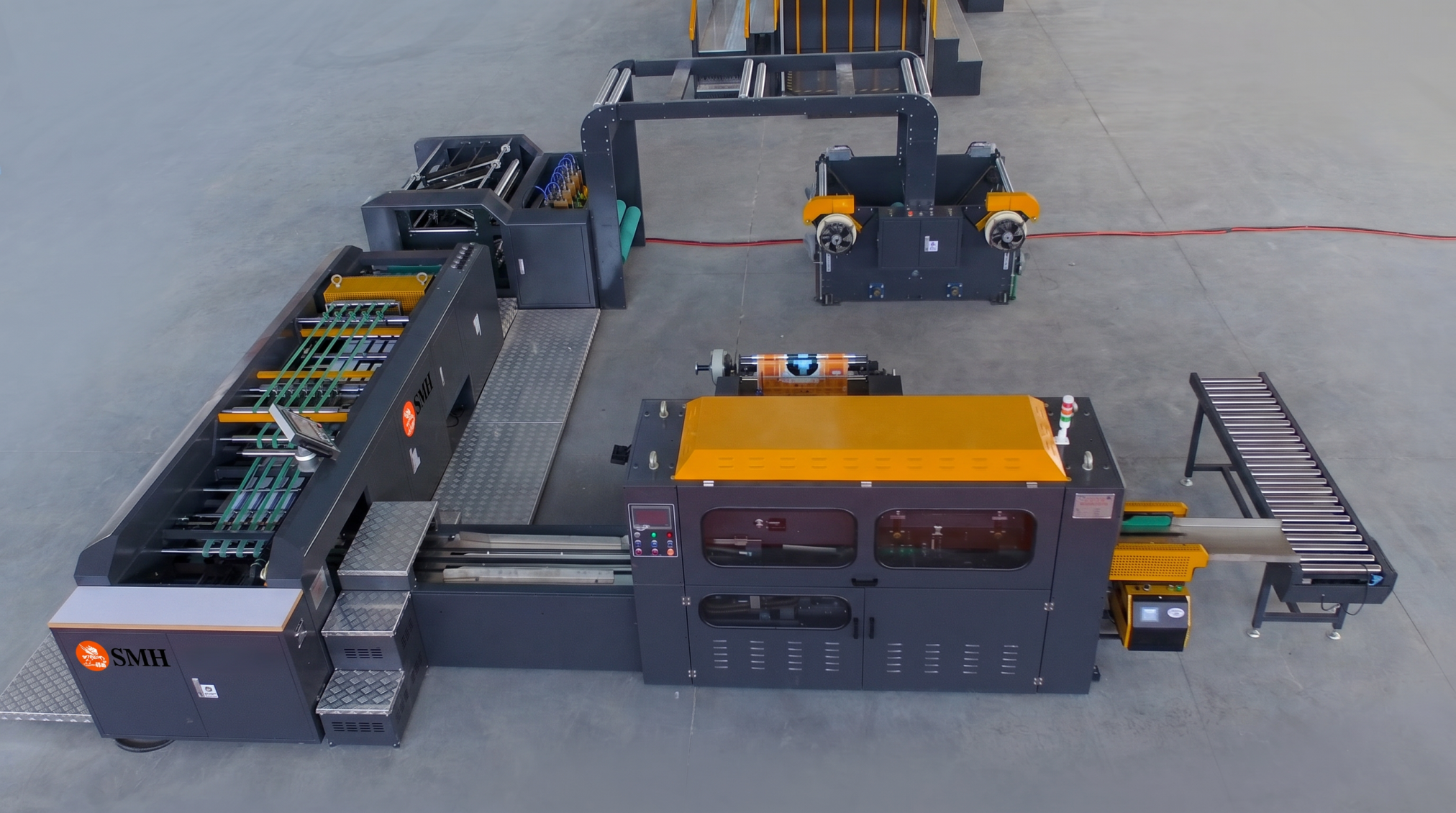
SMH A4 Paper Cutting and Packaging Machine

What an Efficient Line Looks Like

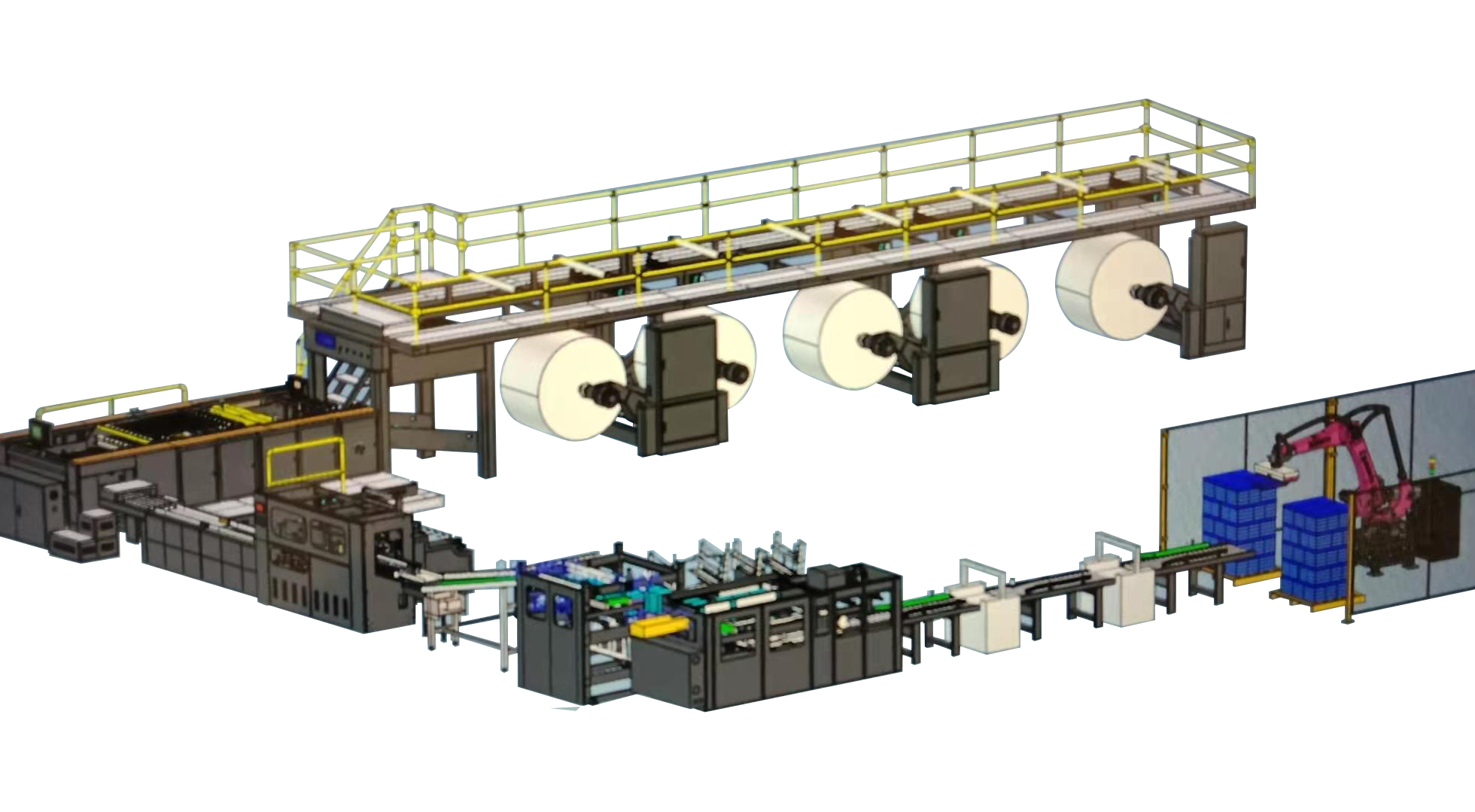
A high-efficiency line is not defined by how busy it appears, but by how smoothly it runs.

In a well-structured process:

  • material flows continuously from one step to the next
  • each section is matched in capacity
  • manual intervention is minimized
  • interruptions are rare and controlled

The result is steady, predictable output rather than fluctuating performance.

Practical Outcome

When workflow and process balance are improved:

  • total output increases without raising nominal speed
  • operator workload becomes more manageable
  • product quality becomes more consistent
  • planning and delivery become more reliable

Efficiency comes from reducing unnecessary actions, not increasing activity.

Conclusion

A busy production line is not always a productive one.
If output remains low despite constant activity, the issue lies in process design, not effort.

Real efficiency is achieved when the entire line operates as a coordinated system, where each step supports continuous flow rather than interrupting it.

How Tension Directly Shapes Final Paper Quality

Tension is often treated as just another parameter on the control panel.
In reality, it is one of the most influential factors in the entire sheeting process.

From unwinding to cutting and conveying, tension determines how the paper behaves at every stage.
If it is not properly controlled, quality problems will appear—even when the machine itself is running normally.

Why Tension Matters More Than It Seems

Paper is not a rigid material.
It reacts continuously to force, especially at high speed.

When tension changes, even slightly, the paper structure responds immediately.
These changes may not always be visible during operation, but they become clear in the finished sheets.

Three Direct Impacts on Final Quality

1. Flatness
Flat sheets require balanced tension across the entire web.

If one side is tighter than the other, internal stress builds up.
After cutting, this stress is released, leading to:

  • edge curl
  • waviness
  • uneven stacking

In many cases, what looks like a material problem is actually caused by uneven tension distribution.

2. Dimensional Stability
Sheet length and width depend on consistent material behavior during transport.

If tension fluctuates:

  • the paper may stretch or relax inconsistently
  • cut length may drift over time
  • size variation can appear between batches

This is especially noticeable during long production runs, where small deviations accumulate.

3. Cutting Accuracy
Accurate cutting requires the paper to be stable at the moment of shearing.

If tension is unstable:

  • the sheet may shift slightly during cutting
  • edges may become uneven
  • alignment between sheets may vary

Even with a precise cutting system, unstable tension can reduce overall accuracy.

Why Tension Becomes Unstable

In practical production, tension issues often come from:

  • changes in roll diameter during unwinding
  • inconsistent brake or drive response
  • improper parameter settings for different paper grades
  • lack of coordination between line sections

Without proper control, tension tends to drift rather than remain constant.

What Stable Tension Control Looks Like

A stable system does not rely on fixed values alone.
It adjusts continuously based on real conditions.

In a well-controlled line:

  • tension remains consistent from the start of the roll to the end
  • changes in roll diameter are automatically compensated
  • different paper grades can run with appropriate force levels

This reduces the need for manual correction and improves repeatability.

Practical Result in Production

When tension is properly controlled:

  • sheets remain flat after cutting
  • dimensions stay consistent across long runs
  • cutting quality becomes more reliable
  • stacking and downstream handling improve

Just as importantly, operators spend less time making adjustments.

Conclusion

Tension is not just a setup parameter—it is a continuous control factor that directly shapes product quality.

If tension is unstable, defects will appear regardless of machine speed or cutting precision.
If tension is stable, the entire process becomes more predictable, and quality follows naturally.