Archives April 2026

How Tension Directly Shapes Final Paper Quality

Tension is often treated as a setting to “get the machine running.”
In reality, it is one of the most critical variables affecting final paper quality.

From the moment the roll starts unwinding to the point where sheets are stacked, tension determines how the paper behaves.
Even small fluctuations can translate into visible defects in the finished product.

Why Tension Matters More Than It Seems

Paper is not a rigid material.
It stretches, compresses, and reacts to force during processing.

If tension is uneven or unstable, internal stress is introduced into the sheet.
This stress may not be obvious during cutting, but it becomes visible afterward—especially in printing or packaging.

Three Key Quality Impacts

1. Flatness
Flat sheets require balanced tension across the full width of the web.

If one side is tighter than the other:

  • the sheet may curl or wave after cutting
  • edges may lift slightly
  • stacking becomes less stable

These issues are often mistaken for material defects, but they are frequently tension-related.

2. Dimensional Stability
Tension directly affects sheet size consistency.

When tension varies:

  • sheet length can drift during production
  • width may become inconsistent due to lateral stress
  • repeatability between batches is reduced

This becomes critical in applications where tight tolerances are required.

3. Cutting Accuracy
Accurate cutting depends on the paper being stable at the moment of shearing.

If tension is not uniform:

  • the sheet may shift slightly during cutting
  • edges can become uneven or skewed
  • alignment between multiple lanes may vary

Even with a precise cutting system, unstable tension will reduce overall accuracy.

Where Instability Comes From

In real production, tension variation is often linked to:

  • changes in roll diameter during unwinding
  • inconsistent brake or drive response
  • lack of coordination between different sections of the line

Without proper control, tension tends to drift over time rather than remain constant.

What Stable Tension Looks Like

A stable system maintains consistent force throughout the entire run:

  • from the first meter of the roll to the last
  • across the full width of the paper
  • regardless of speed changes or material variation

This requires continuous adjustment, not fixed settings.

Practical Approach

Effective tension control is based on:

  • monitoring actual tension rather than relying on set values
  • adjusting dynamically as roll conditions change
  • keeping balance between upstream and downstream sections

When these conditions are met, paper moves through the line without accumulating stress.

Conclusion

Tension is not just a machine parameter—it is a direct driver of product quality.

Flatness, dimensional accuracy, and cutting precision all depend on how consistently tension is maintained.
If tension is unstable, defects are unavoidable, no matter how good the cutting system is.

Stable tension is what allows the rest of the process to perform as expected.

How Paper Grade Affects Cutting Performance | Practical Guide

Not all paper behaves the same in a sheeter.
Running different grades with one fixed setup is one of the most common reasons for defects, unstable operation, and unnecessary downtime.

In real production, cutting performance is closely tied to the physical properties of the paper—weight, stiffness, surface structure, and moisture behavior all play a role. Ignoring these differences leads to inconsistent results.

Why Paper Grade Matters

Each paper grade responds differently to tension, cutting force, and transport conditions.

A setup that works well for one material may cause problems for another.
This is why parameter adjustment is not optional—it is necessary for stable production.

Typical Behavior by Paper Type

1. Lightweight Paper (28–80 gsm)
Thin paper is flexible and highly sensitive to tension changes.

Common issues include:

  • wrinkling during transport
  • web instability at higher speeds
  • risk of web breaks under excessive tension

To run lightweight grades properly, the system must operate under low, stable tension, with smooth conveying and minimal disturbance.

2. Heavy Board and High GSM Paper
Thicker materials behave very differently.

They require:

  • higher and more stable cutting force
  • rigid mechanical support during cutting
  • precise synchronization to avoid deformation

If the cutting force is insufficient or unstable, problems such as rough edges or incomplete cuts can occur.

3. Coated Paper
Coated surfaces introduce another layer of complexity.

While structurally stable, they are more sensitive to surface damage.

Typical risks include:

  • scratching during transport
  • coating cracks at the cut edge
  • visi

Why High-Speed Lines Still Generate Waste | Practical Insight

Many plant owners assume that increasing machine speed will directly increase output.
In practice, this is often not the case.

A line running faster does not automatically produce more saleable product.
If the system is not properly balanced, higher speed usually leads to more instability—and more waste.

The Real Problem: Lack of Synchronization

In most cases, waste at high speed is not caused by the cutting unit itself.
It comes from poor coordination between different sections of the line.

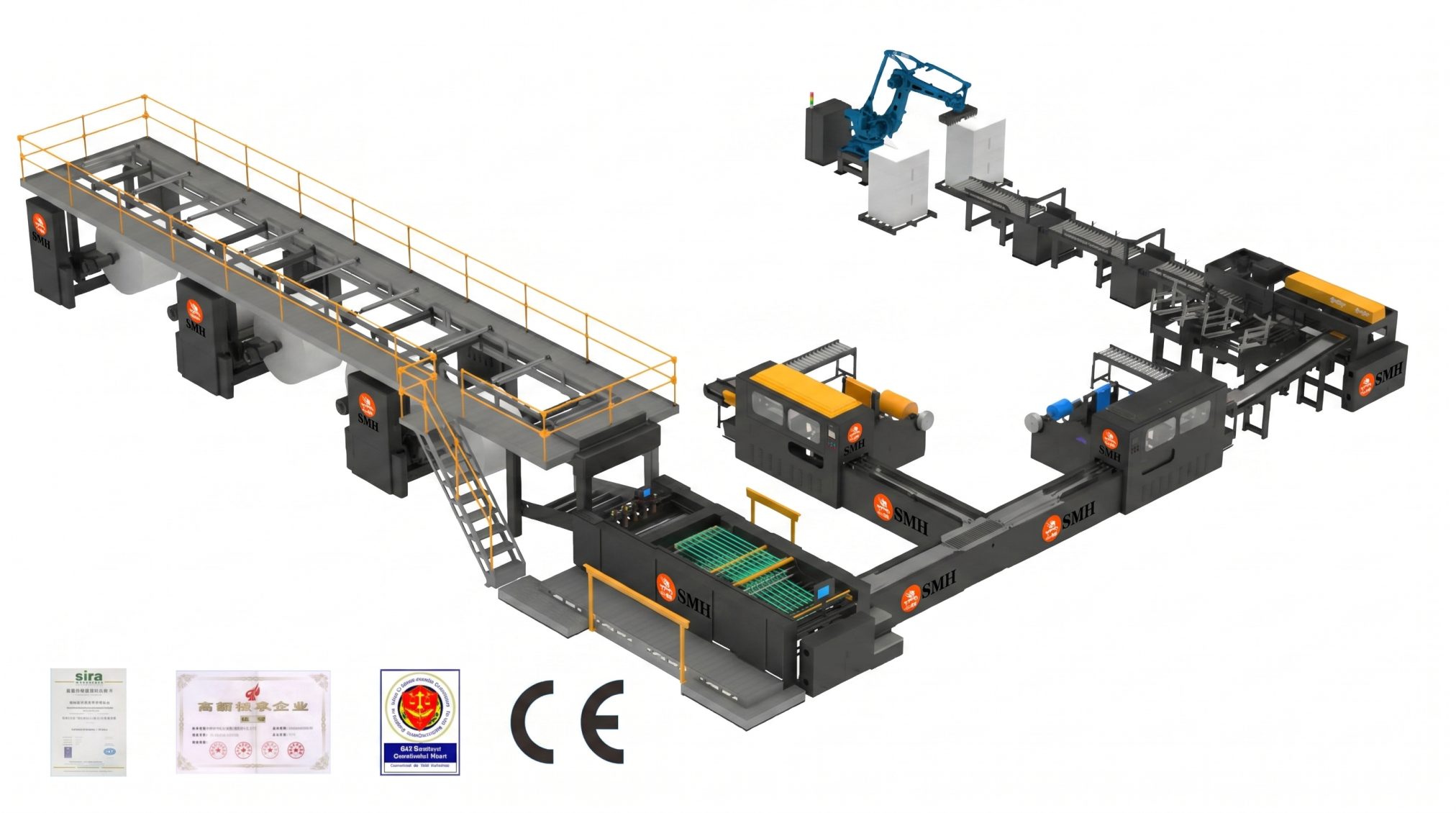
A typical converting line includes:

  • cutting
  • conveying
  • stacking
  • packing

If these parts are not synchronized, problems appear quickly.

For example:

  • sheets leave the cutter faster than the conveyor can handle
  • conveying speed does not match stacking rhythm
  • stacking cannot stabilize sheets before the next batch arrives

The result is predictable: misalignment, wrinkling, sheet overlap, or jams.

All of these become waste.

Why Speed Amplifies Small Problems

At lower speeds, minor issues are often manageable.
Operators can make adjustments, and the system has more tolerance.

At higher speeds, the situation changes.

Small deviations—such as slight timing differences or uneven sheet flow—are magnified.
What was once a minor fluctuation becomes a visible defect or a stop.

This is why some lines perform well at medium speed but struggle when pushed closer to their rated capacity.

Where Waste Typically Comes From

In high-speed production, waste is usually generated in three areas:

1. Transfer Between Sections
If sheet flow is not smooth between cutting and conveying, alignment is lost.

2. Stacking Stability
If sheets are not properly controlled during stacking, they shift, overlap, or become uneven.

3. Process Timing Mismatch
If one unit runs faster or slower than the others, the entire flow becomes unstable.

None of these are caused by speed alone.
They are caused by lack of coordination.

What a Balanced Line Looks Like

A stable high-speed line is not defined by how fast one machine runs, but by how well all sections work together.

In a properly configured system:

  • cutting speed matches conveying capacity
  • conveying speed matches stacking rhythm
  • stacking output matches packing capability

Each part supports the next, without forcing it.

This is what allows the line to run fast without increasing waste.

Conclusion

Higher speed does not guarantee higher efficiency.
Without synchronization, it often does the opposite.

Real efficiency comes from balance—where every part of the line operates in coordination.
Only then can higher speed translate into higher output, rather than higher loss.

How Automation Reduces Labor Cost — Without Limiting Output

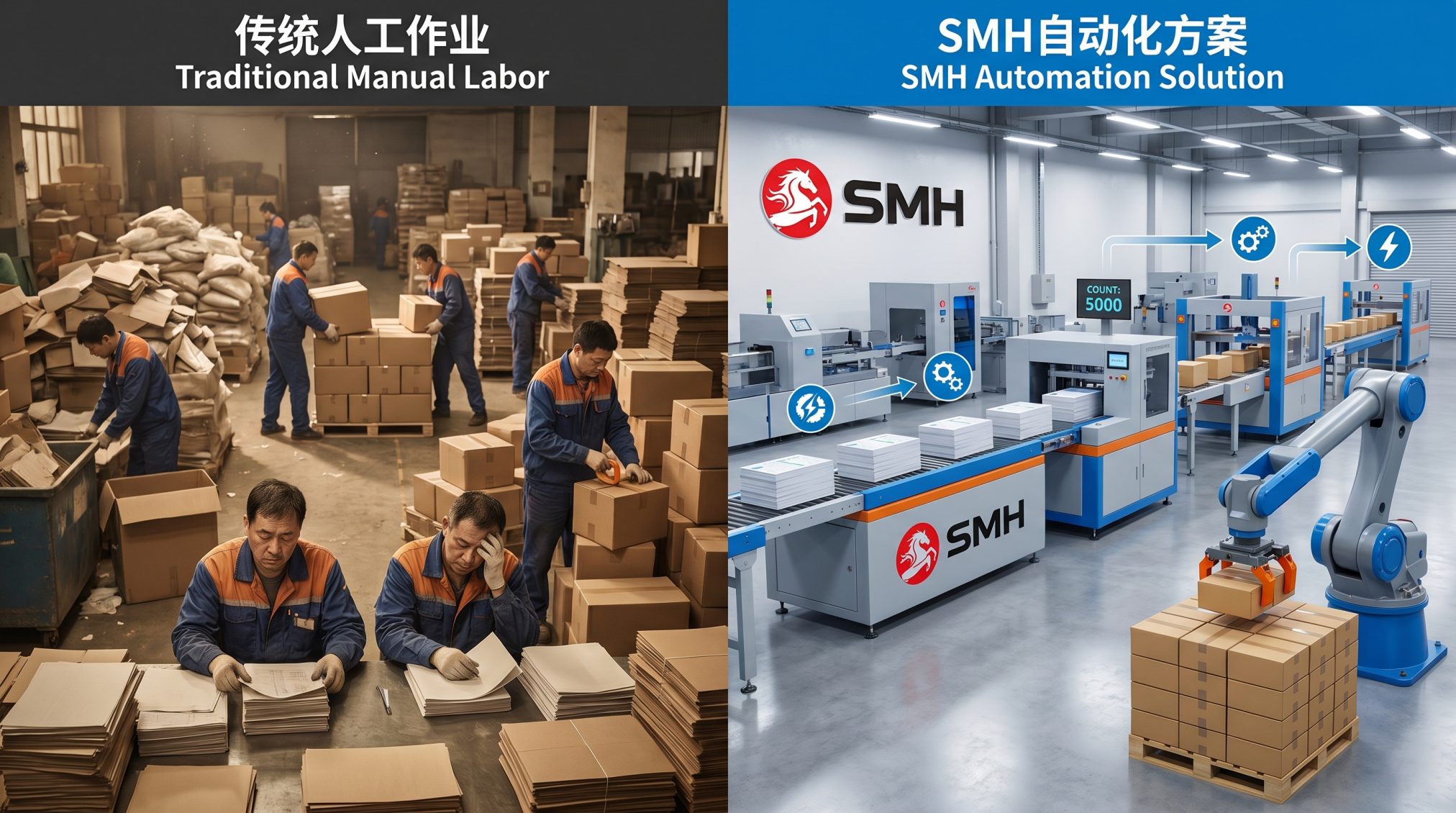
Labor is one of the largest and most unpredictable costs in paper converting. Wages rise, availability fluctuates, and consistency depends on operator skill.

But cutting labor cost doesn’t have to mean cutting output. Done right, automation restructures production so you get more stability with fewer people.

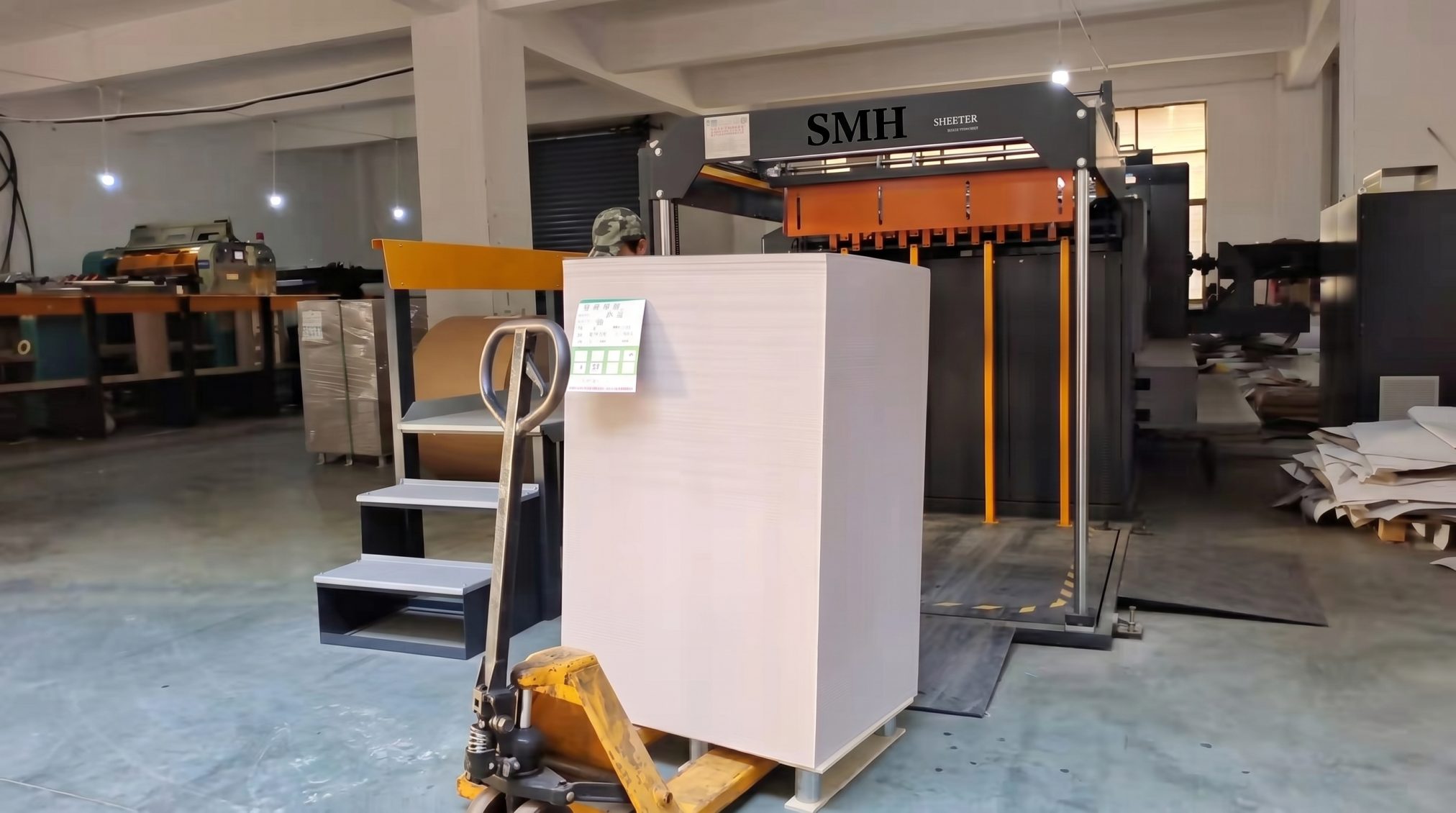
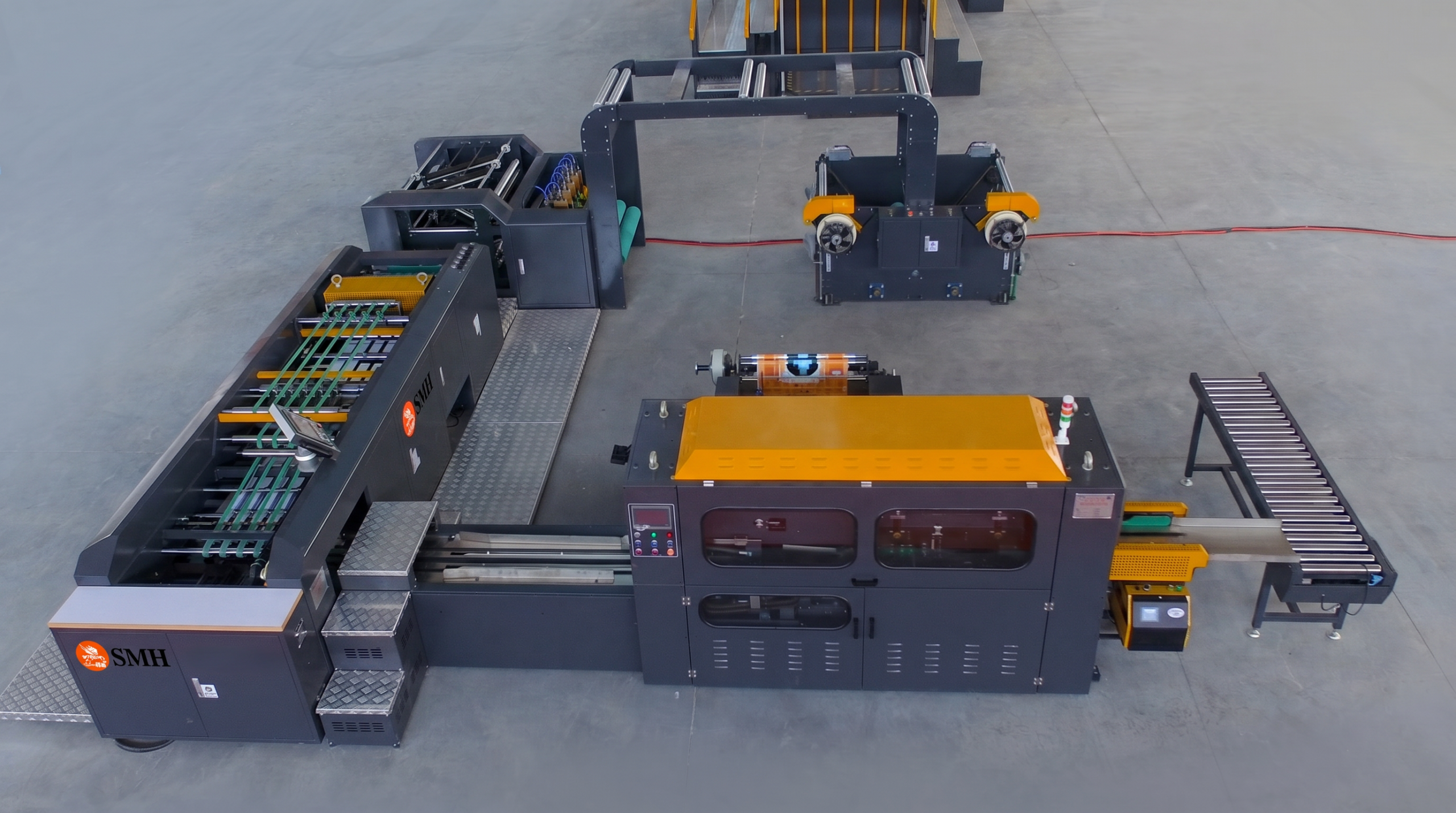
A4 paper cutting machine

Where Labor Cost Really Comes From

Labor cost isn’t just headcount. It adds up across material handling, sheet counting, packing, palletizing, and machine adjustments. In manual setups, more volume means adding more people – and cost grows with output.

What Automation Actually Replaces

Automation doesn’t simply “remove workers.” It replaces repetitive, variable tasks with controlled, repeatable processes:

  • Continuous sheet feeding and alignment
  • Precise counting and stacking
  • Uniform packing and sealing
  • Pallet transfer

Operators shift from physical handling to supervision. Fewer people per shift, and less dependency on manual coordination.

Stability Is Where Cost Reduction Happens

The biggest impact of automation isn’t fewer workers – it’s more stable production. Manual operations bring inconsistency: varying handling speed, fatigue errors, shift differences. Automation standardizes cycle times and execution, reducing hidden costs like rework, downtime, and waste.

Running at Designed Capacity

Many factories have upstream machines capable of higher speed, but manual downstream packing forces the line to slow down. Automation removes that bottleneck. When cutting, stacking, and packing are synchronized, machines run at stable speed, bottlenecks disappear, and output increases without adding labor. Cost per unit drops because productivity improves.

Reducing Long-Term Labor Pressure

Labor challenges aren’t just cost – they’re also availability and retention. Manual operations need continuous hiring, training, shift coordination. Automation reduces this pressure: fewer operators needed, skill requirements shift to system operation, production becomes less dependent on individual performance. Result: a more scalable, manageable operation.

Flexibility Without Complexity

Modern lines must handle different paper grades, order sizes, and job changes. Manual systems struggle – each change introduces delay and error risk. Automated systems allow parameter-based adjustments: quick format switching, consistent execution, minimal disruption. Better responsiveness without extra labor.

The Role of Equipment

Labor reduction depends on how well the system performs in real conditions. Key factors: stability at speed, consistency across paper types, low downtime, and good integration between stages. Well-designed sheeting, packing, and handling systems let you reduce labor while maintaining or increasing output.

Conclusion

Automation reduces labor cost not by simply cutting headcount, but by restructuring production:

  • From manual coordination to system control
  • From variable output to stable performance
  • From labor-driven capacity to equipment-driven efficiency

The result: lower labor cost, plus a more predictable and scalable operation.

Need to reduce labor cost without losing output?

If you’re evaluating how to cut labor dependency while maintaining production, SMH can help assess your current line and define a practical automation upgrade.

Contact SMH – improve efficiency, reduce manual labor, and stabilize your output.