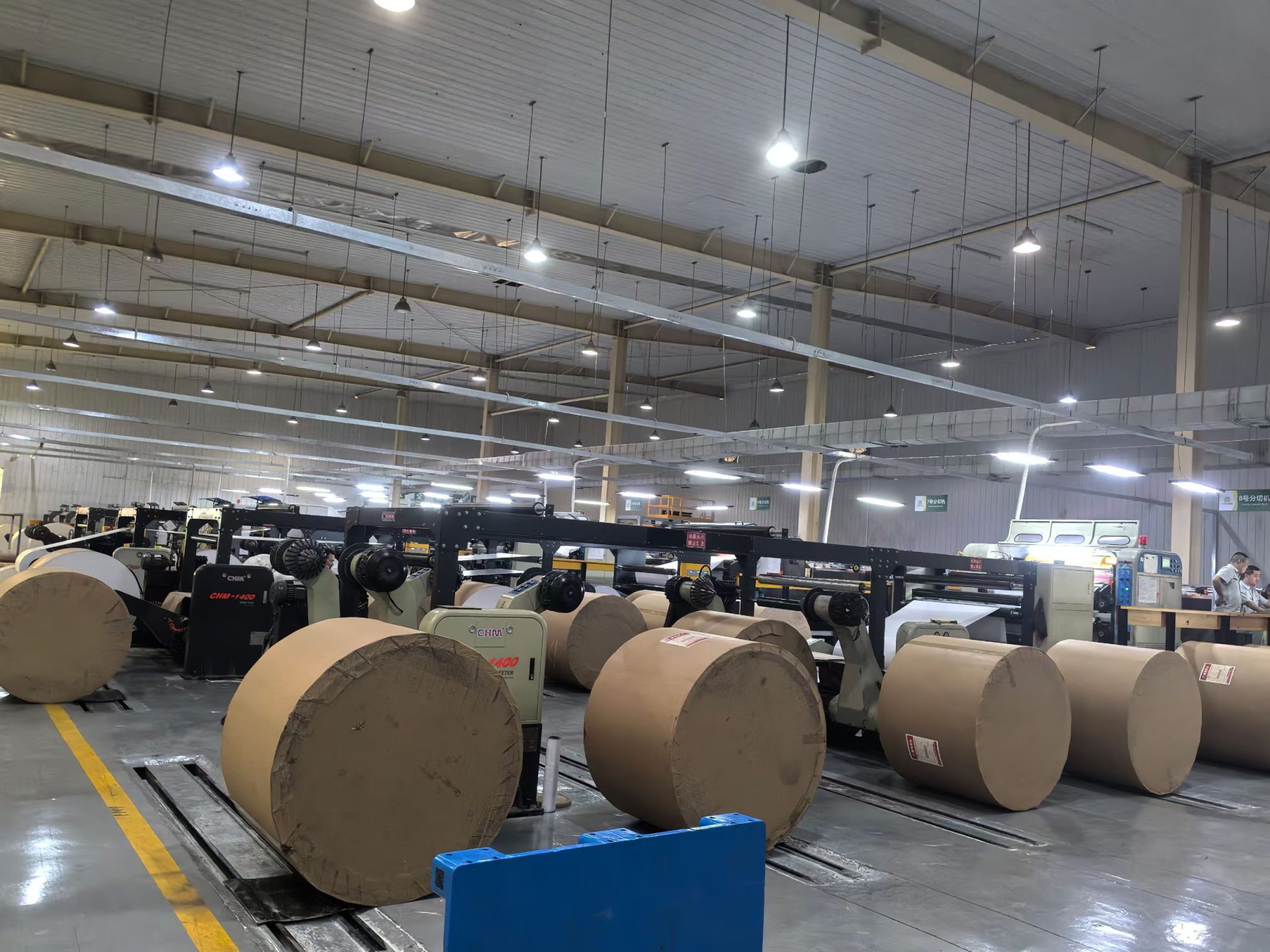
It’s common in the industry: two factories using the same brand and size of jumbo roll end up with completely different yield rates. The difference isn’t luck—it’s planning.
From what we’ve seen in stable, high-yield plants, the gap usually comes from three areas:
Poor layout planning: Cutting sizes that don’t fit the roll width leave large, unusable trim edges.
Unoptimized slitting setup: Wrong width combinations create leftover strips that can’t be sold or reused.
Order-stock mismatch: Cutting rolls without matching upcoming orders leads to overstock and waste.
Improving yield isn’t about cutting faster—it’s about cutting smarter. SMH provides professional slitting layout planning, order matching strategies, and width optimization to help you make the most of every jumbo roll, lower material cost, and improve profit per ton.
Nearly every sheeter runs with accurate sheet length when first started up. But after hours of continuous production, sheets start coming out slightly longer or shorter, causing rejections and material waste. This slow drift is easy to miss but becomes very costly over long production runs.
Based on our after-sales team’s field records, the most common causes of sheet length variation are:
1. Encoder signal drift or instability
Small electronic errors in the encoder add up gradually during long-time operation. This leads to consistent sheet length variation that is hard to detect in early stages.
2. Worn or slipping rubber rollers
Worn rollers lose surface friction and grip. Unstable feeding makes length counting unreliable, resulting in inconsistent sheet length even under the same settings.
3. Mechanical thermal expansion
As the machine warms up, key parts expand slightly. This changes the actual cutting position and feeding distance, causing slow but steady length drift over shifts.
Stable cutting accuracy needs more than just initial calibration. It requires a system designed to resist drift.
SMH equips its sheeters with high-precision, anti-drift encoders and thermally stable mechanical structures. We also provide clear periodic verification guidelines to keep sheet length consistent across entire shifts, reduce waste, and maintain stable cutting accuracy.
workshops, most sheeters are labeled with impressive top speeds, but very few actually run at those levels day in and day out. The problem is almost never the main machine itself—it’s the small, unbalanced details holding the whole line back.
From our years of on-site experience with hundreds of paper mills, we’ve narrowed it down to three most common bottlenecks:
Tension instability: When tension jumps up and down, operators have no choice but to lower speed to stop paper from wrinkling, stretching, or even breaking.
Edge guiding delay: At high running speeds, even tiny deviations in edge position become obvious quickly, forcing the line to slow down for correction.
Transport mismatch: If the conveyor, stacking, or downstream packing can’t keep up with the cutter, the whole line has to throttle back to avoid jams.
Running at full rated speed isn’t about forcing the machine harder. It’s about system balance. SMH designs sheeters with stable tension control, precise edge guiding, and fully synchronized conveying and stacking systems, so your production line can hold rated speed steadily for long runs.
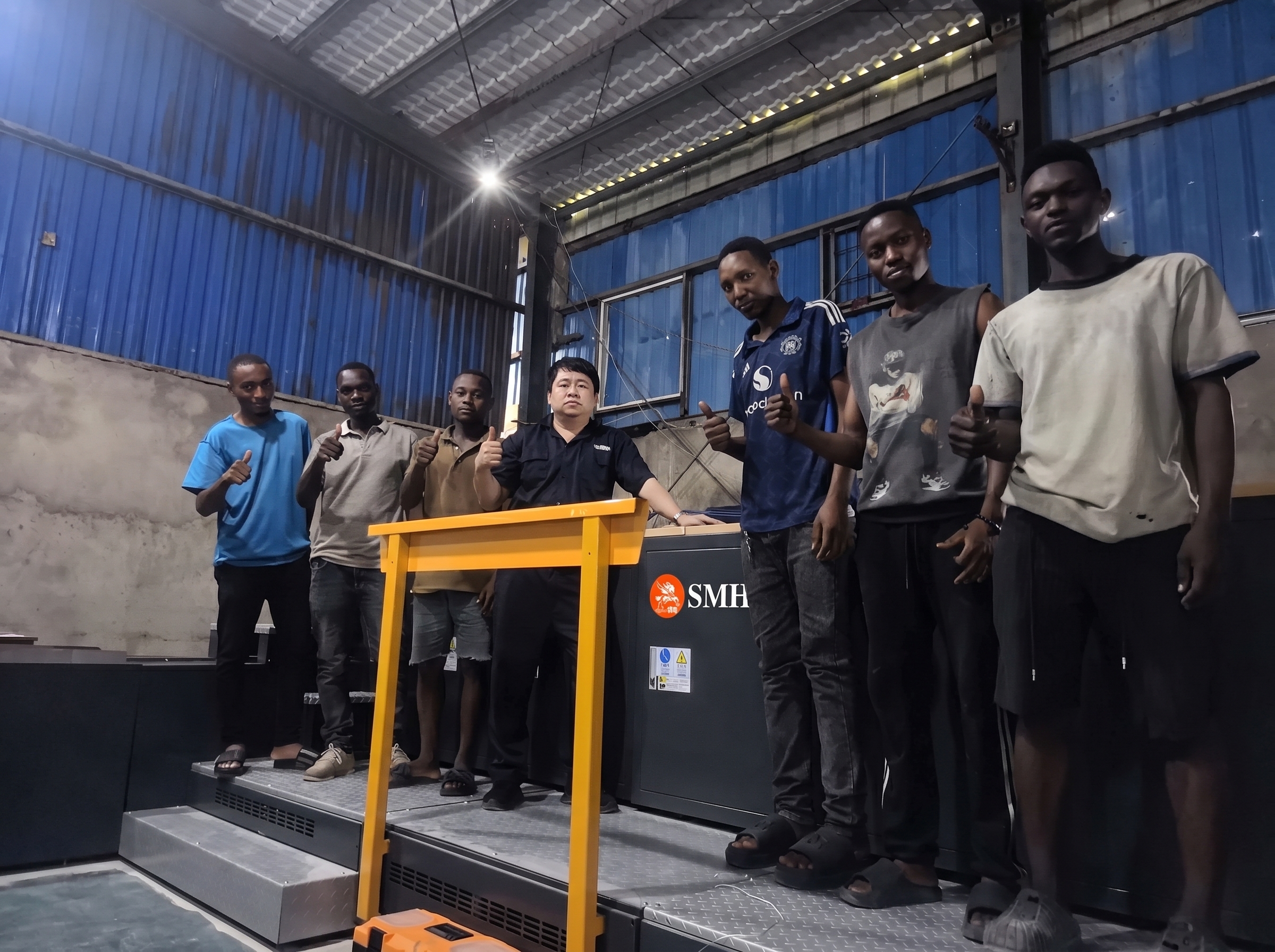
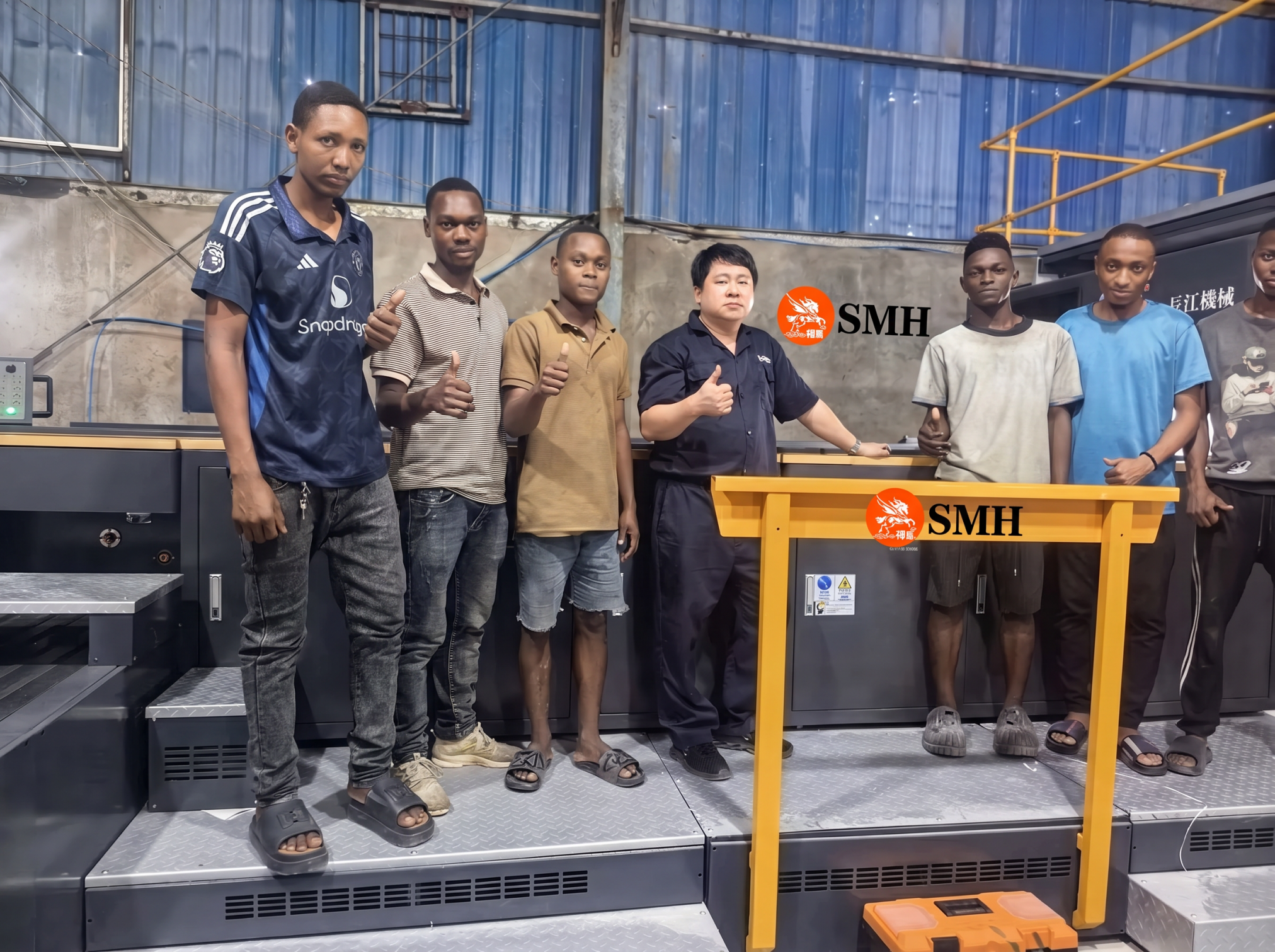
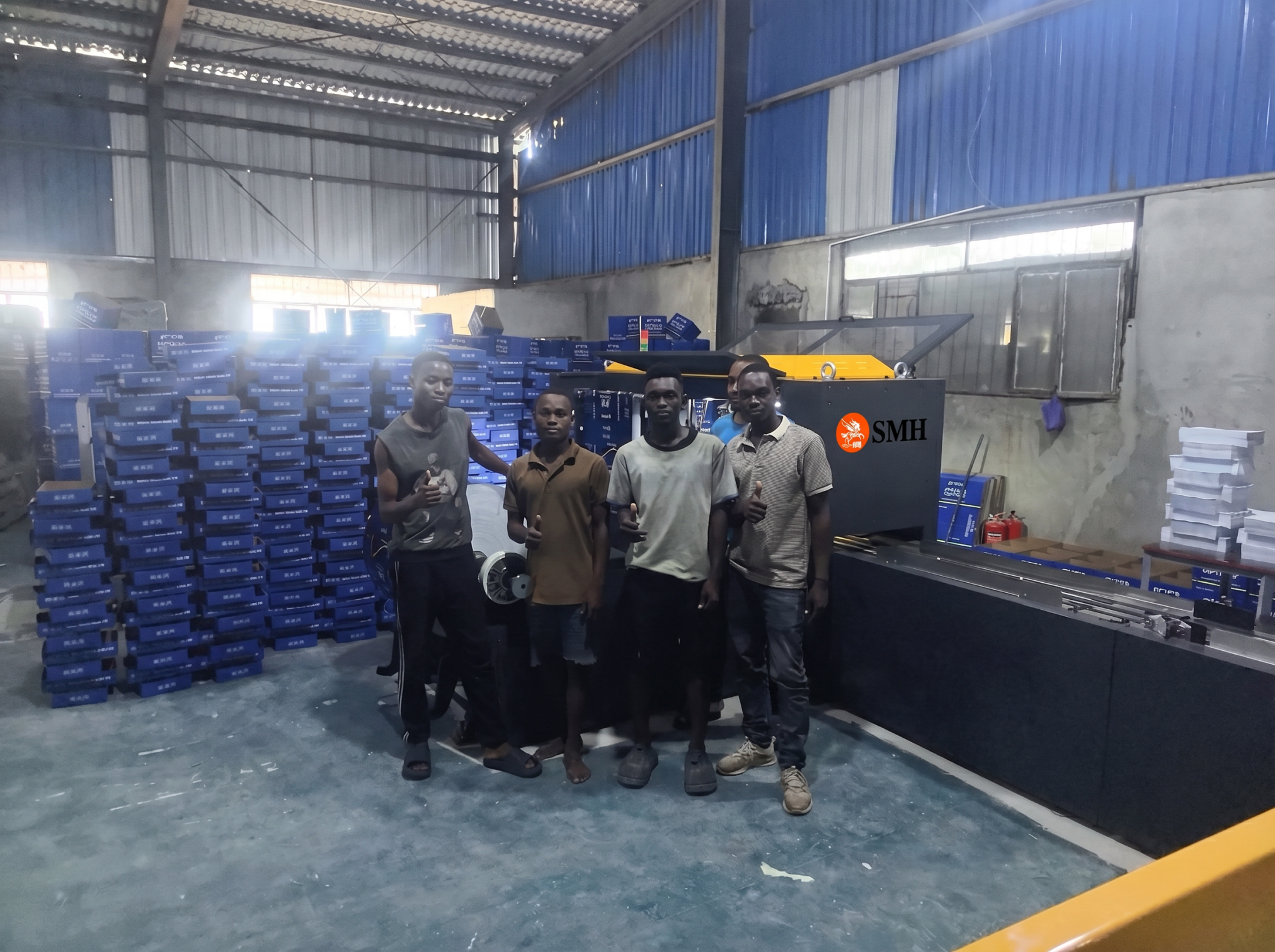
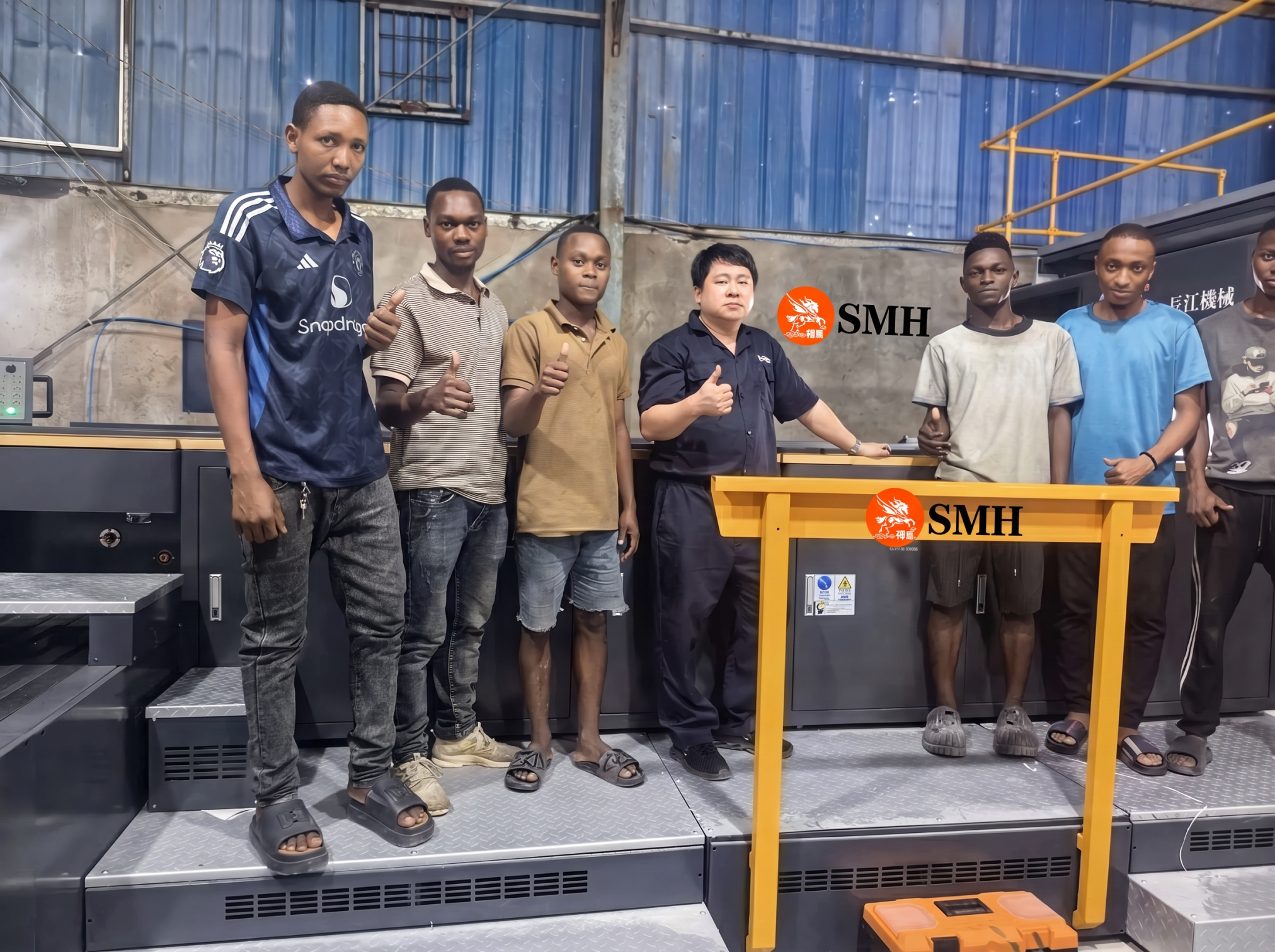
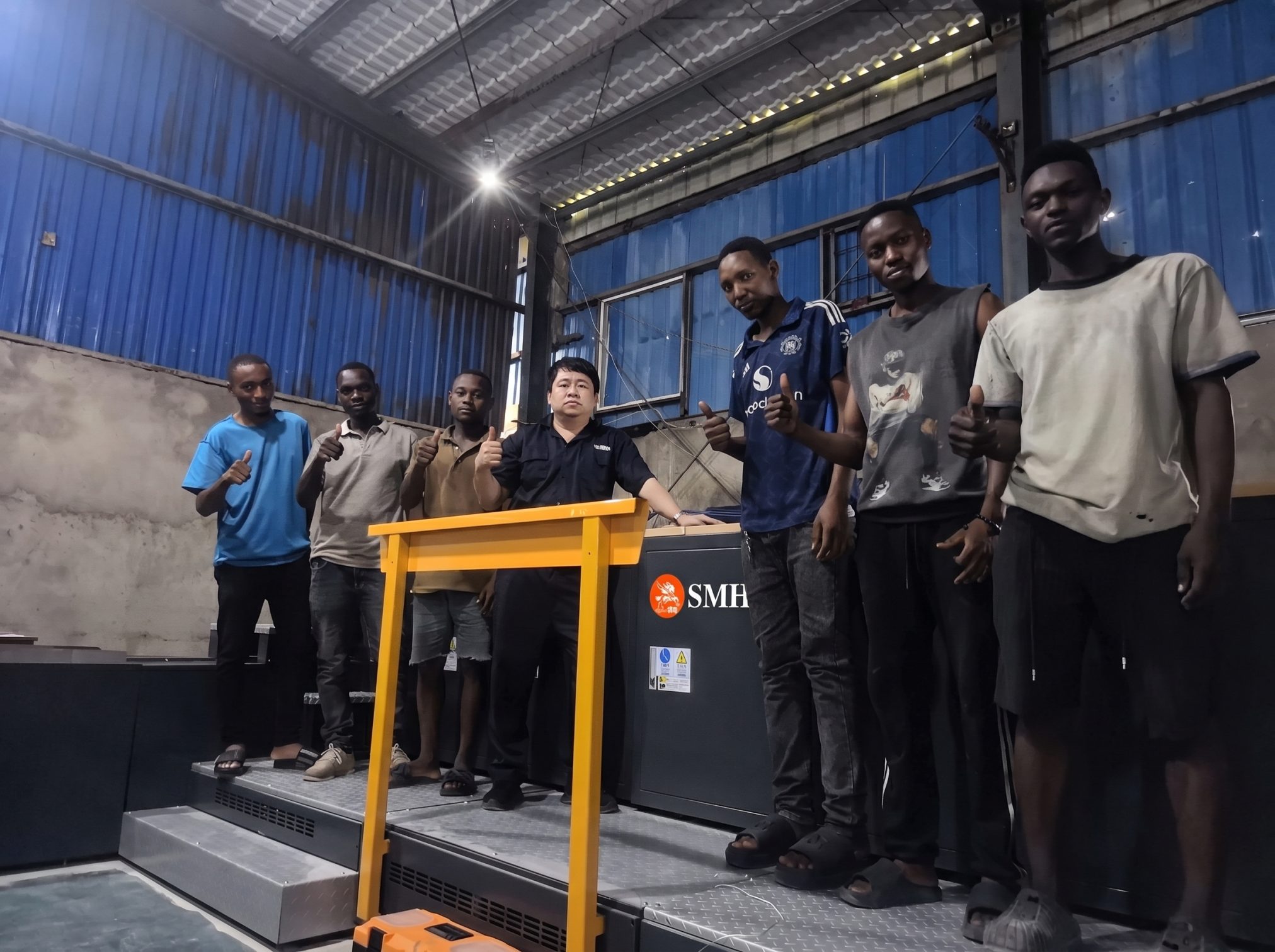
A new A4 paper production line featuring the SMH A4-5 sheeter and A4B packing machine has recently been installed and commissioned in Tanzania. The project marks a practical step for the local converter, moving from basic supply toward integrated, in-house processing.
From Manual to Continuous Production
Before the upgrade, the factory relied heavily on semi-manual operations. Cutting speed was limited, packing consistency varied, and output depended on labor coordination.
Now, with the A4-5 and A4B running, the workflow is stable and continuous. Jumbo rolls convert directly into A4 sheets, then automatically counted and packed. Output stays consistent across shifts, with less manual intervention and better predictability.
Why A4-5 Was Selected
The factory chose the A4-5 to meet rising demand and support future growth. Its wider web handling and higher cutting capacity allow more paper processed in the same time.
Key benefits in daily operation:
Stable cutting accuracy at continuous speed
Consistent sheet size across large volumes
Less material waste from better control
For a market where both volume and reliability matter, these give a clear edge.
Packing Stability with A4B
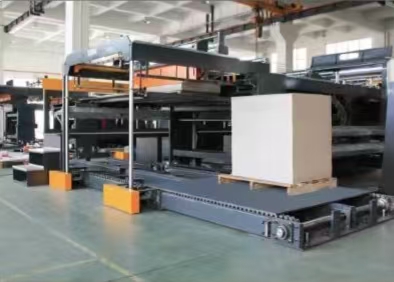
The A4B packing machine solves a common bottleneck: end-of-line handling. Instead of manual counting and wrapping, the system delivers uniform ream packaging, stable sealing, and synchronized output with the sheeter. Finished products are ready for shipment without rework or delay.
Adapted to Local Conditions
The Tanzania installation was configured with three practical considerations:
Compatibility with local paper grades
Stable performance under variable power conditions
Simplified operation for local teams
SMH engineers supported installation and operator training, so the line ran reliably from the start.
Operational Impact
Since commissioning, the factory reports:
Higher daily output with fewer interruptions
More consistent product quality
Reduced dependence on manual labor
Better ability to handle bulk and repeat orders
The business no longer limits itself to trading or basic processing – it now controls a larger part of the value chain.
Conclusion
The A4-5 and A4B installation in Tanzania reflects a broader shift: moving from manual, fragmented operations to integrated, automated production. By stabilizing both cutting and packing, the line provides not only higher capacity but also the consistency needed to compete in a growing market.
Need to upgrade your A4 line?
If you’re planning to move toward in-house A4 converting, SMH can help design a solution based on your actual production conditions.
Contact SMH to evaluate your line setup and improve output stability.