

The A4 paper business is often seen as simple: buy jumbo rolls, cut, pack, and sell.
In reality, the difference between a profitable operation and a struggling one lies in how well the production system is planned from the beginning.
Many new entrants underestimate three things:
equipment configuration, cost structure, and market positioning.
Getting these right early on determines whether the business can scale or not.
1. Know Your Business Model First
Before spending money on machines, be clear about your role in the market. Three common models:
- Trading-based – buy and resell finished A4 paper. Low margin, high competition.
- Converting-based – buy jumbo rolls and produce your own A4. Higher margin, better control.
- Integrated – combine production, branding, and distribution.
Most successful companies move toward converting because it gives you quality control, flexible production, and better profit.
2. Raw Material: Jumbo Roll Quality Matters
Your final product depends heavily on the jumbo roll. Key factors:
- GSM consistency
- Moisture content
- Stiffness and smoothness
- Supplier stability
Inconsistent raw material leads to cutting defects, size variation, and poor stacking. A stable supply chain is just as important as the machine.
3. Equipment Configuration – The Core of Your Line
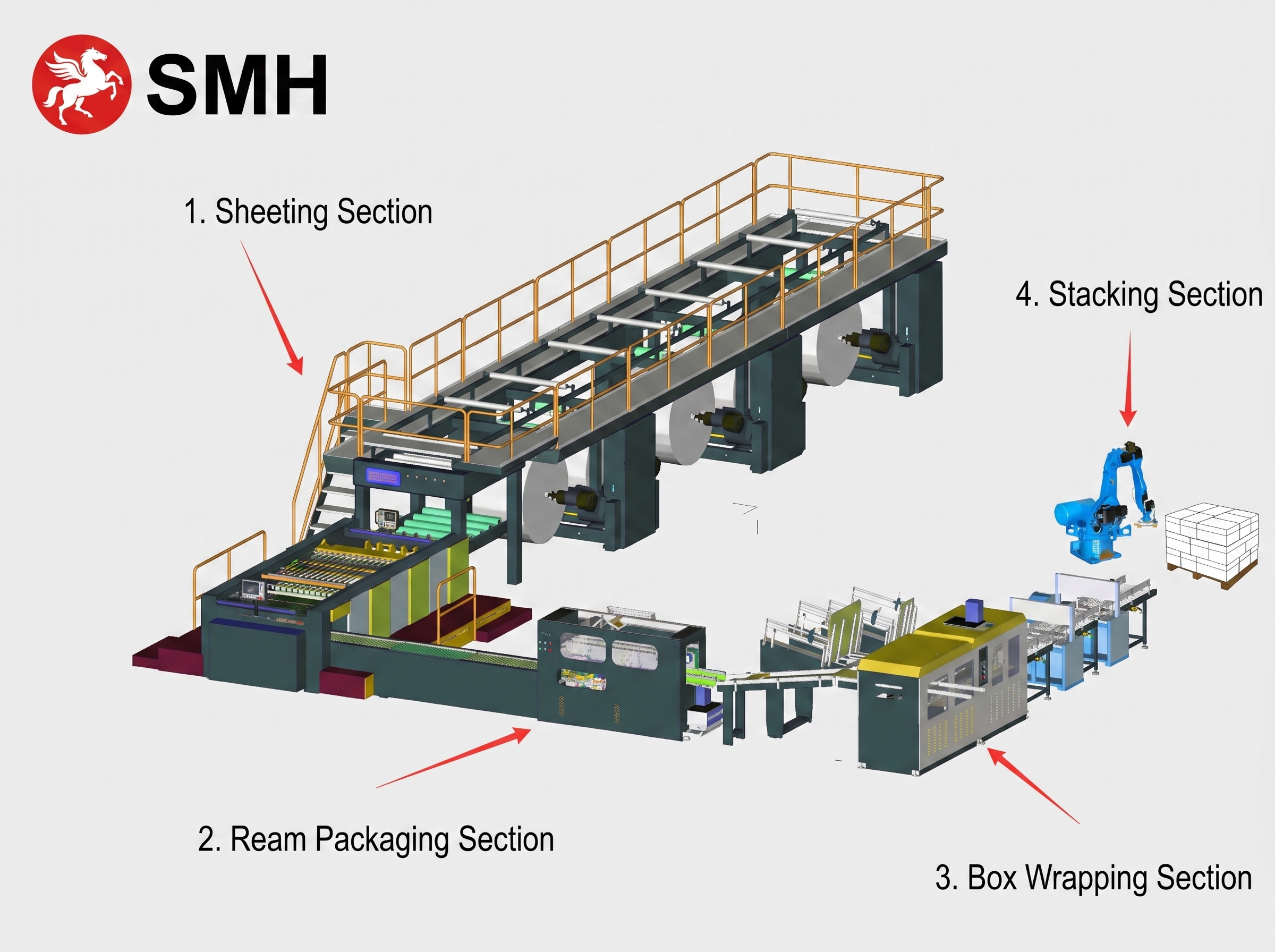
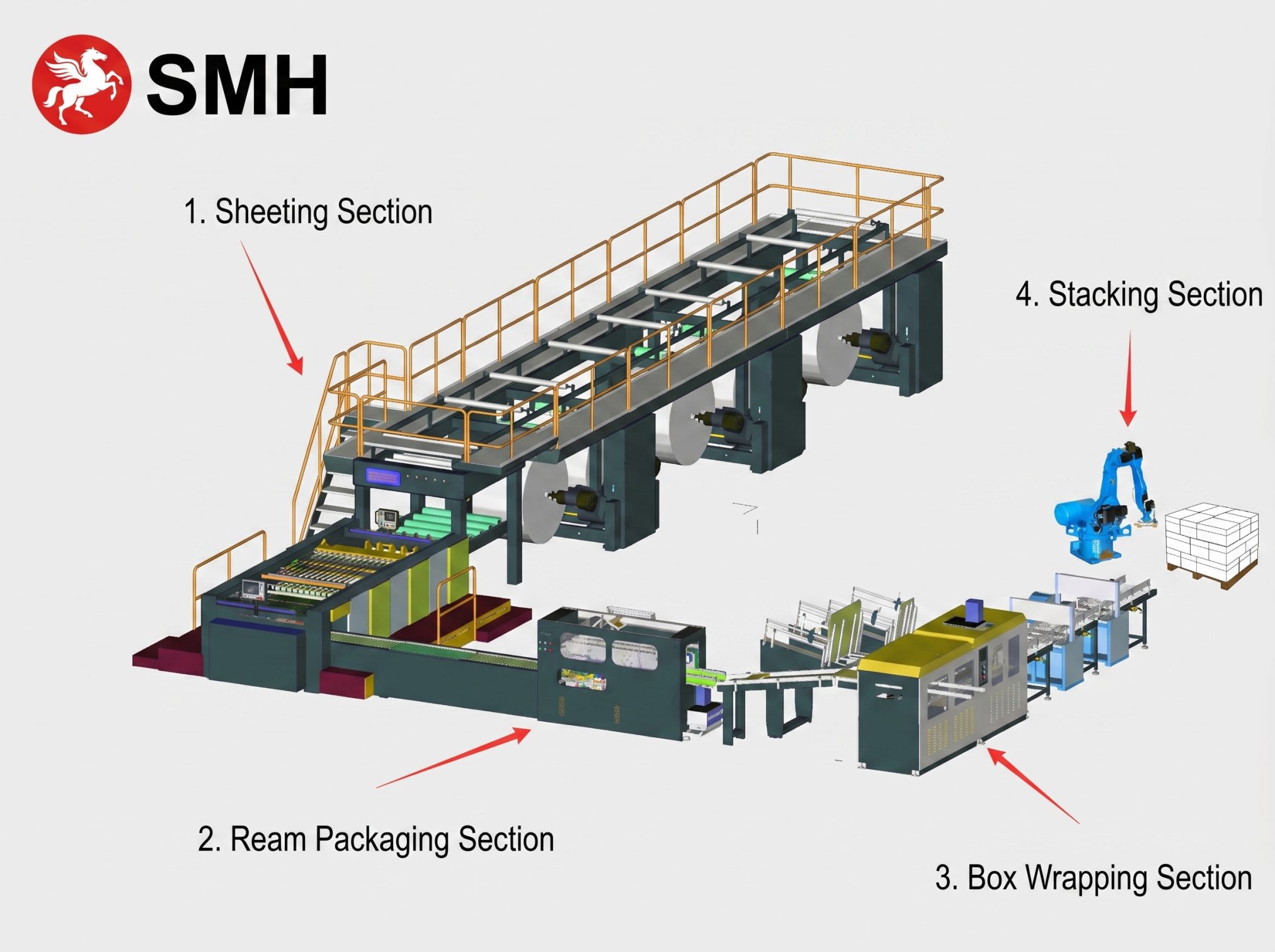
A complete A4 production setup usually includes:
- High-speed sheeter / cutting system
- Ream wrapping machine (A4 packing)
- Carton packing system
- Optional automation (palletizing, auto splicing, etc.)
The key is not just buying machines, but making sure they work as a coordinated line. If cutting speed exceeds packing capacity → bottleneck. If automation is missing → labor cost goes up. If precision is unstable → product quality suffers.
A balanced line gives you continuous operation, stable output, and minimal downtime.
4. Efficiency vs. Initial Investment
One common mistake: choosing equipment based only on price. Low-cost machines often mean lower speed, higher defect rates, and frequent downtime. That directly hurts profitability.
A properly configured line should deliver stable high-speed production, consistent cutting accuracy, and reliable packaging output. In most cases, efficiency – not upfront cost – determines your ROI.
5. Labor and Automation Planning
Labor is a major cost in A4 production. Manual operations limit speed, consistency, and scalability. By adding automation – auto ream packing, carton packing, palletizing – you reduce manpower, improve efficiency, and maintain consistent quality. Automation becomes critical as volume grows.
6. Market Positioning and Product Strategy
Not all A4 paper is the same. You need to decide:
- Target market (office, wholesale, export)
- Product grade (economy, standard, premium)
- Branding strategy
Customization can be a competitive advantage – different sheet counts per ream, private label production, flexible order quantities. The closer you are to the end market, the more value you capture.
7. Factory Layout – Often Overlooked
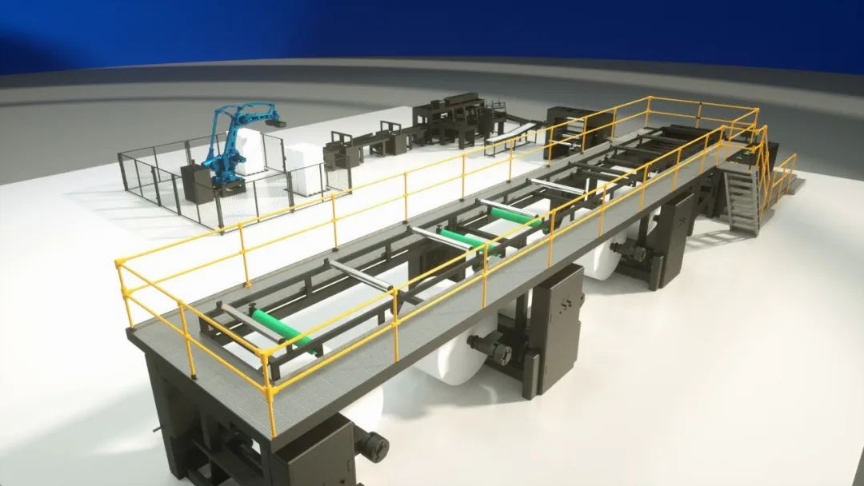
Poor layout wastes time and labor. A good layout ensures smooth material flow (jumbo roll → cutting → packing → storage), minimal manual handling, and clear production zones. Don’t skip this.
8. Cost Structure and ROI
Your profitability depends on raw material cost, labor cost, and operational efficiency. A well-designed A4 line reduces waste, increases output, and shortens payback period. Companies that invest in stable, efficient equipment usually achieve faster ROI than those who go for the cheapest option.
Conclusion
Starting an A4 paper business is not just buying a machine – it’s building a reliable production system. Success depends on the right equipment configuration, stable raw material, efficient operations, and smart market positioning.
Do it right, and you move beyond low-margin trading into a sustainable, scalable business.
Need a complete A4 production line?
If you’re planning to start or upgrade your A4 paper manufacturing business, SMH can provide complete production solutions based on your actual factory requirements.
Contact SMH for a customized A4 production line configuration – we’ll help you find the most efficient setup for your investment.