machine News

Why Tension Stability Matters in Roll Slitting

Tension Problems Usually Show Up Slowly

In many factories, tension issues do not appear suddenly.

The machine starts the job normally. After some time, the paper begins drifting slightly. Edge quality changes. Length accuracy becomes inconsistent.

Operators start adjusting tension manually. The line stabilizes briefly. Then the same issue returns again.

This is one of the most common signs of unstable web tension.

Stable Tension Keeps the Entire Process Consistent
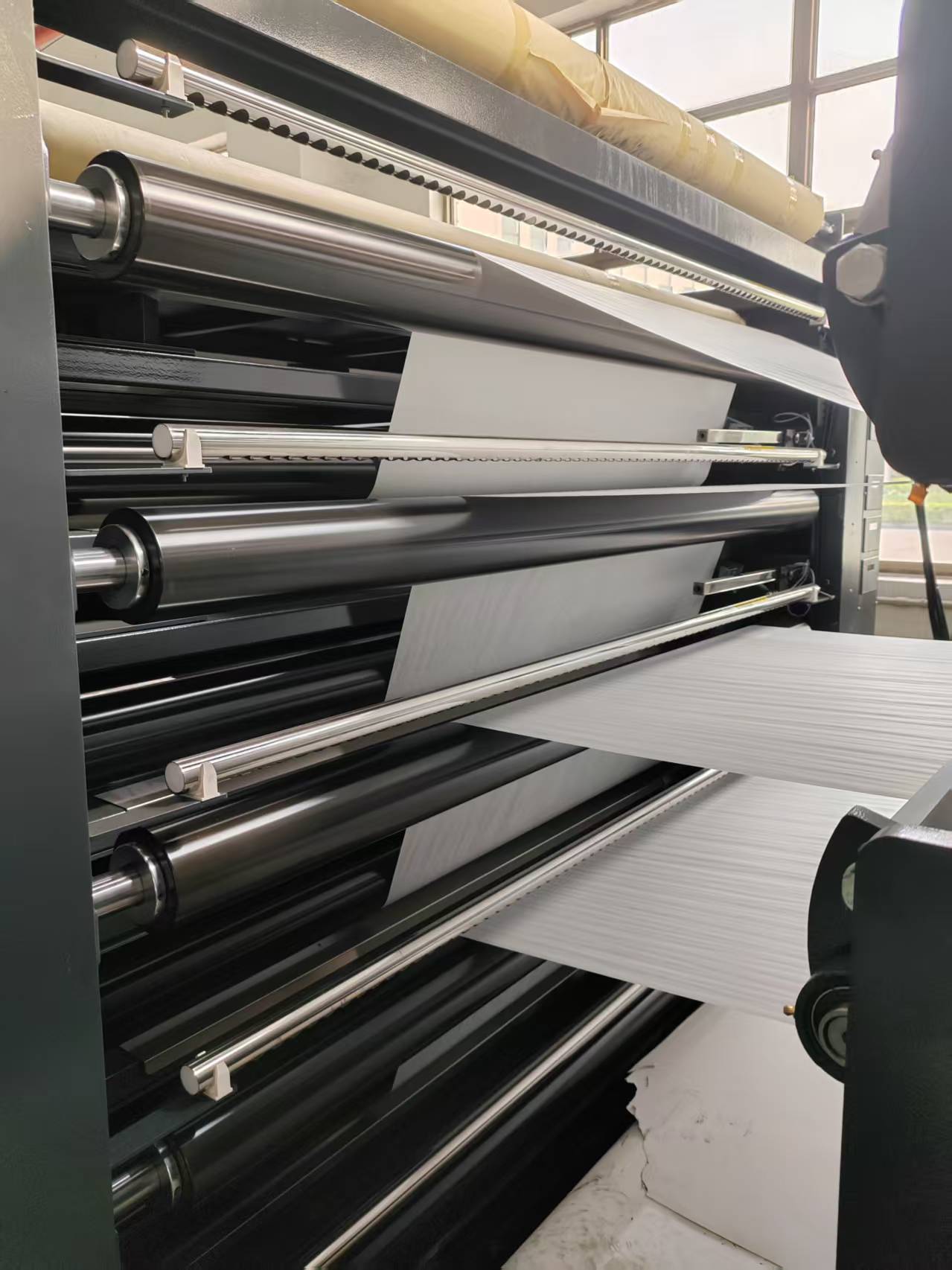
During slitting production, tension controls how the material moves through the machine.

If tension changes continuously:

  • tracking becomes unstable
  • slit width accuracy changes
  • wrinkles may appear
  • edge quality becomes inconsistent

This is especially obvious with thin paper or lightweight film.

Small tension changes can immediately affect material behavior.

Roll Diameter Changes Affect Tension

One common problem appears as the roll diameter becomes smaller.

If the tension control system does not adjust correctly, the pulling force changes during production.

At the beginning of the roll, production may look stable. Later, the material behavior changes gradually.

Factories sometimes think this is an operator issue. Actually, the control system may simply lack stable closed-loop adjustment.

Why High-Speed Production Needs Better Tension Control
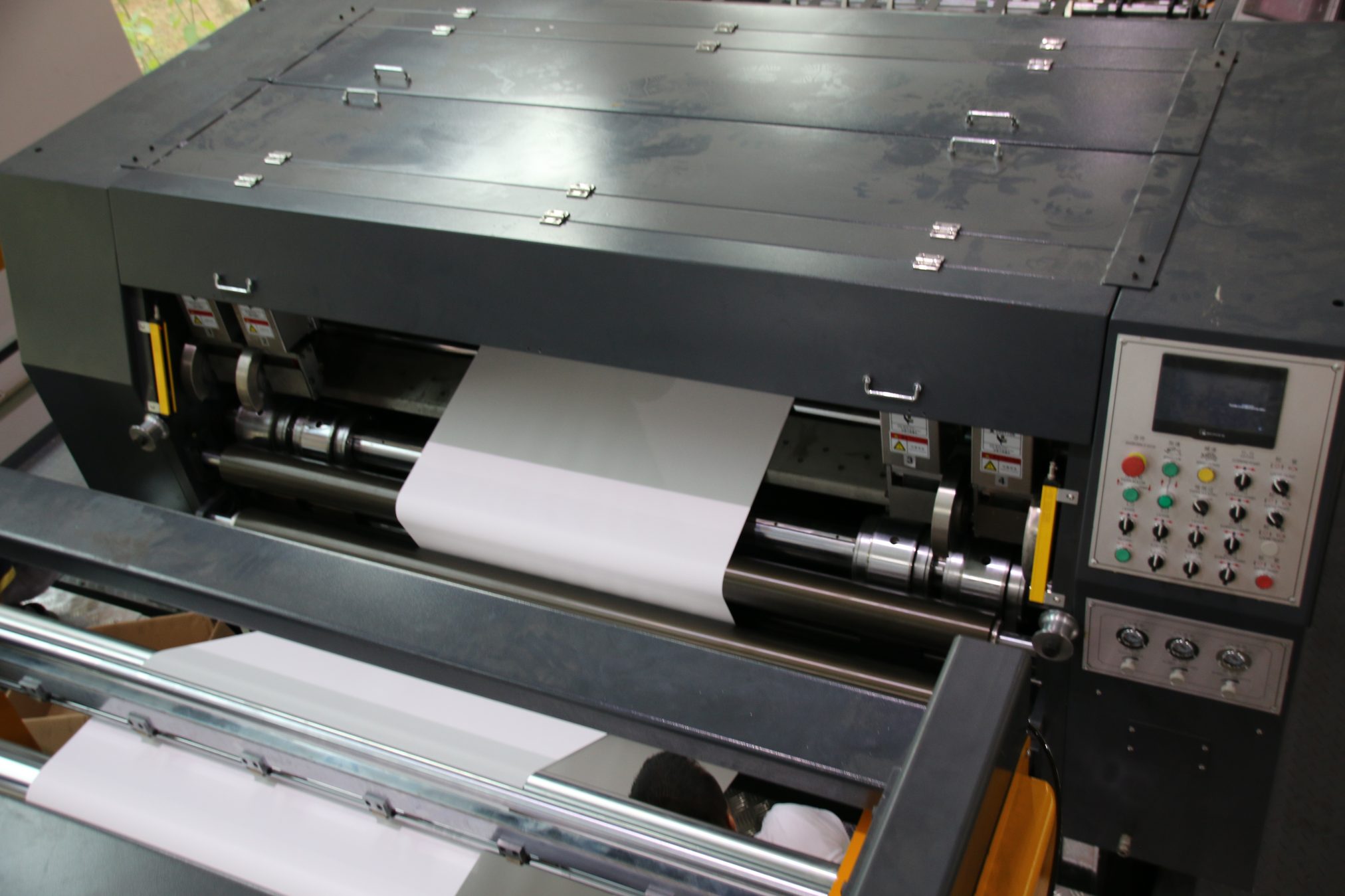
At low speed, minor tension fluctuations may not create obvious defects.

At high speed, the same fluctuation becomes much more serious.

The material reacts faster. Guiding becomes more sensitive. Knife stability also becomes more important.

That is why high-speed production lines usually require:

  • precise tension feedback
  • stable brake systems
  • synchronized drive control
  • accurate roller traction

Without stable tension, speed alone cannot improve production quality.

Stable Production Starts With Stable Material Flow
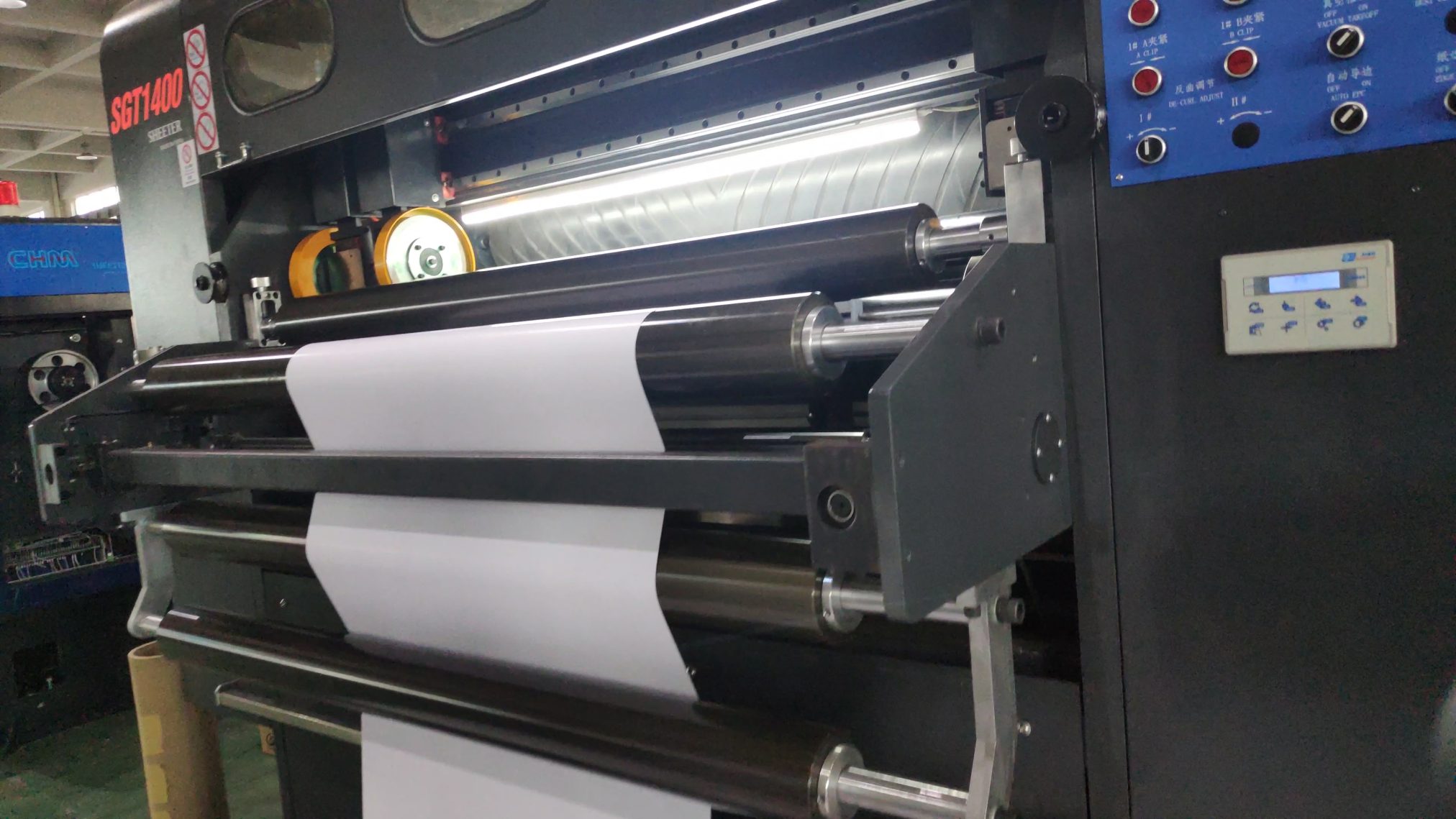
Factories with stable slitting quality usually focus heavily on material flow consistency.

When tension stays stable:

  • paper tracking improves
  • edge quality becomes more repeatable
  • operator adjustments decrease
  • production waste reduces

Stable tension is not only about one parameter on the screen. It affects the entire converting process.
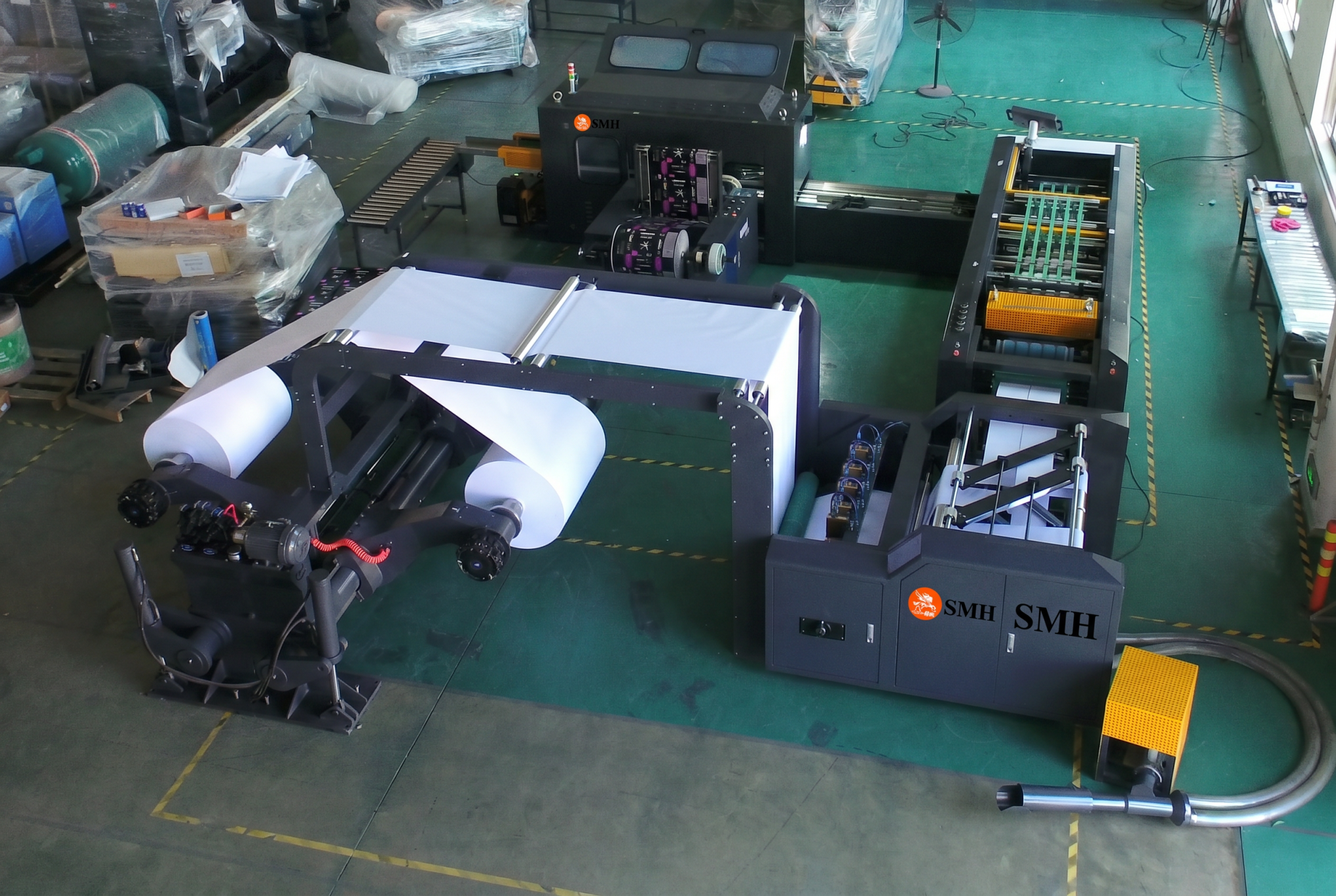

Why More Global Paper Mills Are Choosing SMH

Production Efficiency Is Becoming the Core Competitiveness of Paper Mills

In today’s paper converting industry, rising labor costs, increasing market competition, and higher delivery requirements are forcing paper manufacturers to improve production efficiency. For many factories, equipment stability and automation level directly affect production cost and profitability.

This is one of the main reasons why more paper mills worldwide are upgrading to automatic paper sheeting and packaging systems from SMH.

Reducing Labor Costs Through Automation

Traditional paper converting production often relies heavily on manual operation. Frequent material handling, packaging, pallet replacement, and paper inspection increase labor costs and production risks.

SMH automatic production lines integrate paper sheeting, counting, packaging, stacking, and conveying into one continuous process. Automatic pallet changing systems and robotic stacking devices help reduce manual operation while improving production consistency.

For large-scale paper mills, automation not only reduces labor dependency but also improves production stability during long-term operation.

Stable Production Means Lower Operating Costs

High-speed equipment must maintain stable operation over long production cycles. Unstable cutting precision, paper dust, and machine vibration can increase waste and maintenance costs.

SMH focuses on improving:

  • Cutting precision
  • Servo synchronization accuracy
  • Tension control stability
  • Automatic fault detection
  • Long-term running reliability

Stable production helps factories reduce paper waste, minimize downtime, and improve final product quality.

Complete Production Line Solutions

SMH provides complete paper converting solutions including:

  • Paper sheeters
  • A4 copy paper production lines
  • Ream wrapping systems
  • Carton packing systems
  • Automatic conveying solutions

By integrating multiple production processes into one automated workflow, customers can significantly improve overall factory efficiency.

Supporting Long-Term Factory Growth

Today, SMH equipment serves customers across Asia, Europe, Africa, and South America. As paper manufacturers continue expanding production capacity, automation and intelligent production systems will remain key drivers of industry development.

SMH continues providing efficient and stable equipment solutions to help customers improve productivity and reduce operating costs in competitive global markets.

How Fully Automatic A4 Paper Production Lines Reduce Labor Costs

Labor costs continue to rise in the global manufacturing industry. To remain competitive, paper converting factories are investing in fully automatic production lines.

Integrated automation reduces manual handling and improves production efficiency.

What Makes a Production Line Fully Automatic?

A fully automatic A4 paper production line includes:

  • Automatic unwinding
  • Web guiding
  • Slitting
  • Rotary cutting
  • Automatic stacking
  • Ream wrapping
  • Carton packing
  • Robotic palletizing

Reduced Manual Operation

Traditional production lines require multiple workers for:

  • Material handling
  • Packing
  • Stacking
  • Palletizing

Automation significantly reduces labor requirements.

Stable Continuous Production

Automatic systems improve:

  • Production consistency
  • Packaging quality
  • Speed synchronization
  • Material flow stability

Typical Staffing Requirements

A traditional line may require 8 operators.

With optimized automation, staffing can be reduced while maintaining high productivity.

Fully automatic A4 paper production lines provide significant advantages in labor savings, efficiency, and production consistency. As factories move toward smart manufacturing, automation will continue to play a central role in the paper industry.

Why Some Slitting Lines Produce More Paper Dust

Paper Dust Is Usually a Sign of Instability

Paper dust
Paper dust

A small amount of paper dust is difficult to avoid completely.

But when dust becomes excessive, something in the process is usually unstable.

Operators often notice it first around the knife area. Dust begins collecting near rollers, conveyors, and finished stacks.

In serious cases, dust also affects printing quality and downstream converting.

Knife Condition Is Only One Part of the Problem

Worn knives are a common reason for dust. A dull edge tears fibers instead of cutting cleanly.

But even new knives can still create dust if:

  • knife alignment is incorrect
  • tension is unstable
  • machine vibration is high
  • pressure settings are inconsistent

That is why replacing blades alone does not always solve the issue.

Thick Paper and High Speed Increase Dust Risk

Heavy paper grades create stronger cutting resistance. At higher speed, the cutting force increases further.

If the cutting system is unstable, fiber tearing becomes more serious. That increases dust generation quickly.

Single knife systems are more sensitive to this because the cutting force comes mainly from one side.

Double knife systems usually reduce dust because the cutting force stays more balanced. The paper separates more smoothly during cutting.

Vibration Creates Hidden Quality Problems

Many factories underestimate vibration.

Even slight vibration affects knife contact consistency. Once knife contact changes, the edge quality changes too.

This can create:

  • uneven fiber cutting
  • rough edges
  • dust buildup
  • unstable slit quality

At low speed the problem may appear manageable. At high speed it becomes much more visible.

Stable Cutting Conditions Reduce Dust Naturally

Factories with lower paper dust levels usually maintain:

  • stable knife alignment
  • correct knife clearance
  • balanced tension
  • synchronized feeding speed
  • clean roller surfaces

The goal is not simply reducing dust after production. The goal is preventing unstable cutting conditions before dust forms.