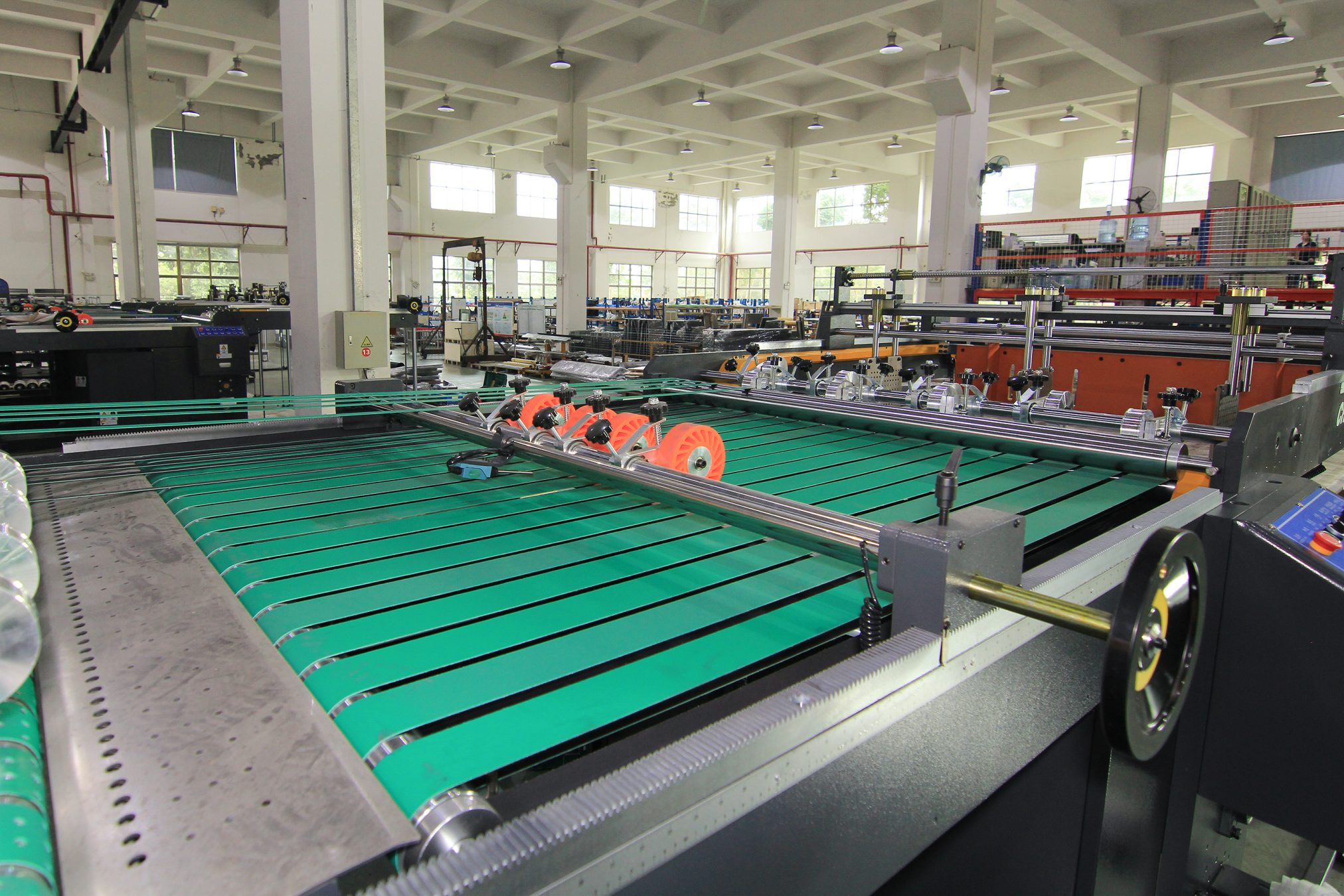
Tag SMH A4 Paper Cutting and Packaging Machine

A4-4 vs A4-5 Production Line: Which Copy Paper Machine Is Better?

Choosing the right A4 paper production line is critical for paper converting factories. Production capacity, paper width, factory layout, and automation requirements all influence machine selection.

The CHM A4-4 and A4-5 production lines are both designed for automatic A4 copy paper manufacturing, but they serve different production needs.

Main Difference Between A4-4 and A4-5

The biggest differences include:

  • Paper width
  • Cutting lanes
  • Production output
  • Machine dimensions
  • Power configuration

The A4-5 model supports wider paper rolls and higher production capacity.

Production Capacity Comparison

CHM A4-4

  • Output: 30–37 reams per minute
  • Main power: 32 kW
  • Suitable for medium-volume production

CHM A4-5

  • Output: 42 reams per minute
  • Main power: 34 kW
  • Suitable for high-volume production

For factories requiring maximum productivity, A4-5 provides stronger capacity advantages.

Machine Size Comparison

A4-4 Dimensions

17681 × 4140 × 3190 mm

A4-5 Dimensions

20114 × 4355 × 3190 mm

Factories with limited workshop space may prefer the more compact A4-4 model.

Automation Configuration

Both models support:

  • Automatic unwinding
  • Web guiding
  • Slitting
  • Cross cutting
  • Automatic stacking
  • Ream wrapping
  • Carton packing
  • Robotic palletizing

The fully automatic closed-loop system reduces manual operation and improves production stability.

Which Machine Should You Choose?

Choose A4-4 If:

  • You have limited factory space
  • You run medium production volumes
  • You require stable and flexible production
  • You have lower initial investment requirements

Choose A4-5 If:

  • You need maximum production output
  • You process wider paper rolls
  • You focus on large-scale copy paper manufacturing
  • You require high-speed continuous operation

Conclusion

Both A4-4 and A4-5 production lines provide advanced automation and high cutting precision. The final choice depends on production goals, factory conditions, and expected output.

For high-capacity factories, A4-5 delivers stronger productivity. For balanced production and flexible operation, A4-4 remains an excellent solution.

How Double Rotary Synchronous Cutting Improves A4 Paper Production Efficiency

Introduction

A4 paper cutting machine

In the modern paper converting industry, production efficiency and cutting precision directly determine profitability. Traditional cutting systems often struggle with paper dust, unstable cutting lengths, and high-speed vibration. To solve these challenges, many manufacturers are upgrading to double rotary synchronous cutting systems.

CHM A4-4 and A4-5 production lines apply advanced double rotary synchronous cutting technology to achieve high-speed and high-precision A4 paper production. The system is widely used in copy paper plants, packaging factories, and paper converting facilities.

What Is Double Rotary Synchronous Cutting?

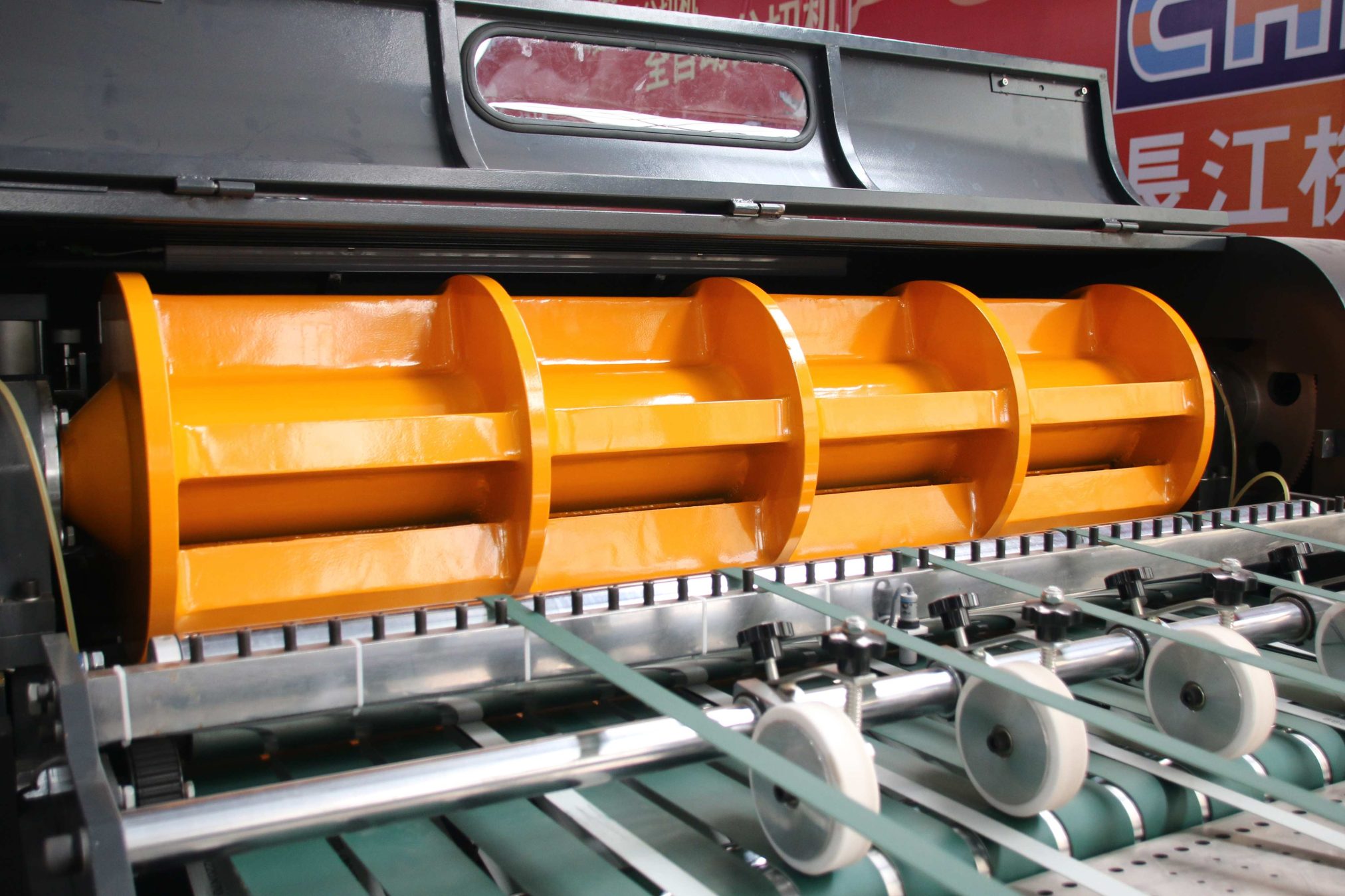
Double rotary synchronous cutting is a high-speed cutting method that uses two synchronized rotary knife shafts operating simultaneously. Through servo synchronization and gapless gear transmission, the upper and lower knife shafts rotate at the same speed and phase.

Double spiral synchronous cropping

This technology creates smooth and progressive cutting instead of impact cutting.

Main advantages include:

  • Higher cutting precision
  • Smooth paper edges
  • Reduced paper dust
  • Stable high-speed operation
  • Longer knife life

Why It Matters in A4 Paper Production

A4 paper
A4 paper

A4 paper manufacturing requires continuous operation at high speed. Even a small cutting error can create waste and reduce packaging quality.

The CHM A4-5 production line can achieve:

  • Up to 42 reams per minute
  • Cutting accuracy within ±0.2 mm
  • Maximum speed of 280 m/min

These results are possible because the double rotary system minimizes vibration and maintains synchronization throughout production.

Key Components Supporting Precision

Several components work together to maintain stable cutting quality:

1. Helical Knife Groove Design

The helical knife groove allows progressive cutting contact, reducing impact force during cutting.

2. Gapless Gear Transmission

Gapless gears eliminate backlash and maintain accurate knife synchronization.

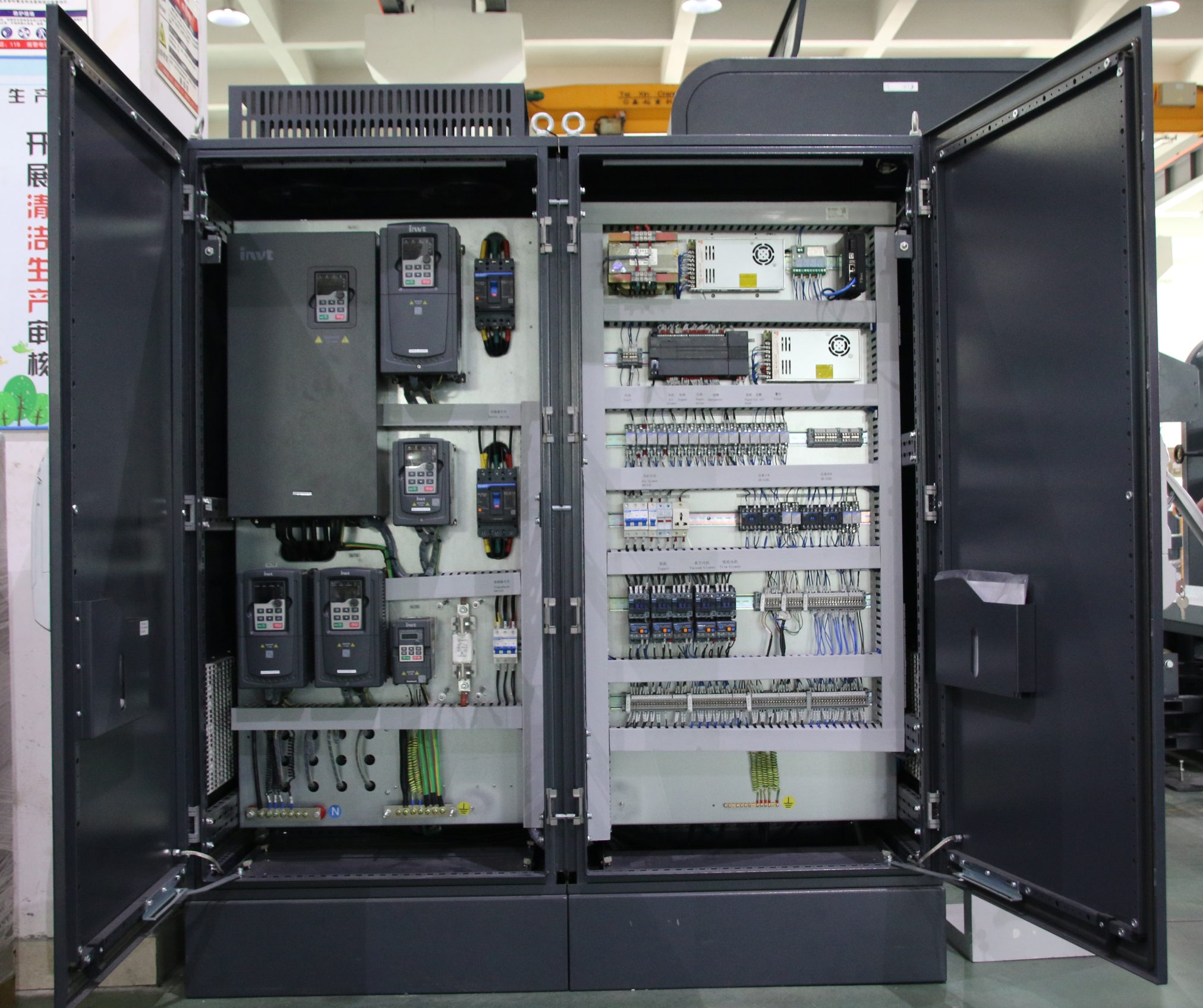
3. PLC Closed-Loop Control

The PLC system continuously monitors speed, tension, and knife position.

4. Dynamic Balancing of Knife Shafts

Balanced knife shafts reduce vibration during high-speed rotation.

Benefits for Paper Manufacturers

Factories using advanced double rotary cutting systems can achieve:

  • Higher production capacity
  • Lower labor costs
  • Better packaging consistency
  • Reduced downtime
  • Less material waste

For high-volume copy paper plants, these advantages significantly improve production profitability.

Conclusion

Double rotary synchronous cutting technology has become a key solution for modern A4 paper production lines. By combining servo synchronization, precision knife design, and closed-loop control systems, manufacturers can achieve higher speed, cleaner cuts, and more stable production.

As market demand for high-quality copy paper continues to grow, advanced cutting technology will remain essential for competitive production.

Why Some Factories Enjoy Much Lower Waste Rates

Why Some Factories Enjoy Much Lower Waste Rates

In paper converting, some waste – trim loss or startup scrap – is expected. But when waste rates stay consistently high, the issue usually isn’t the material or even the machine. It’s how the process is controlled.

Interestingly, factories with the lowest waste rates aren’t always using the newest equipment. What sets them apart is how consistently they run their process.

Waste Is Often a Control Problem

The gap in waste rates rarely comes from a single factor. Instead, it’s from small variations throughout production:

  • Inconsistent setup between shifts
  • Frequent parameter changes without clear standards
  • Lack of repeatability between similar orders

Each variation may seem minor, but together they lead to higher reject rates, off-spec sheets, and increased material loss.

Three Habits of Low-Waste Operations

1. Strict Process Control
Once a set of conditions works for a specific paper grade, document it and follow it consistently. Changes are only made when necessary, based on clear reasons. This reduces trial‑and‑error and keeps results predictable.

2. Consistent Parameter Management
Treat parameter settings as production assets. Save job‑specific recipes, reuse proven settings, and record adjustments for future reference. This shortens setup time and reduces the risk of errors that cause waste.

3. Standardized Operator Practices
Operator behavior directly affects waste. In low‑waste plants, procedures are clearly defined, each step follows a standard method, and results depend less on individual experience. This ensures consistency across shifts.

Why Equipment Alone Does Not Solve the Problem

Upgrading machines can improve performance, but it doesn’t automatically reduce waste. If the process remains inconsistent, new equipment will face the same issues: unstable operation, repeated adjustments, inconsistent output. Waste reduction requires both capable equipment and disciplined process control.

Practical Impact on Production

When these habits are applied:

  • Startup waste is reduced
  • Fewer sheets are rejected during production
  • Output becomes more stable
  • Material utilization improves over time

Even small improvements in waste rate have a measurable impact on total production cost.

Conclusion

Lower waste isn’t the result of working harder or running faster. It comes from running the same process the same way, every time.

Factories that control parameters, standardize operations, and reduce unnecessary variation achieve consistently lower waste rates – regardless of equipment level.

Want to lower your waste rate?

If your waste levels are higher than they should be, SMH can help you assess your process control, parameter management, and operator practices.

Contact SMH – get a practical waste reduction plan based on real production habits, not just new hardware.

How Roller Condition Impacts Paper Quality Secretly

Rollers are one of the most underestimated components in a sheeting line.
Attention is usually placed on cutting units, motors, and control systems, while rollers are expected to “just work.”

In reality, rollers directly affect how paper moves through the machine.
When their condition is not stable, problems appear gradually—often without being immediately traced back to the rollers themselves.

Why Rollers Matter More Than Expected

Every stage of the process depends on controlled paper movement.
Rollers are responsible for:

  • feeding the paper forward
  • maintaining traction
  • supporting stable tension
  • guiding the web through different sections

If any of these functions become inconsistent, the impact will show up in product quality.

Common Roller-Related Issues

1. Surface Wear
Over time, roller surfaces lose their original friction characteristics.

When grip decreases:

  • paper may slip slightly during transport
  • feed accuracy becomes inconsistent
  • sheet length may begin to vary

This issue often develops slowly, making it difficult to detect early.

2. Contamination Build-Up
Dust, paper fibers, coating residue, or adhesive can accumulate on roller surfaces.

This leads to:

  • uneven contact across the roller width
  • inconsistent feeding force
  • localized slipping or drag

In some cases, contamination creates small but repeated disturbances in paper movement.

3. Misalignment
Even a slight deviation in roller alignment can affect web behavior.

If rollers are not parallel:

  • the paper may drift to one side
  • tension becomes uneven across the width
  • edge quality and cutting position are affected

These problems are often mistaken for guiding or tension issues, while the root cause lies in mechanical alignment.

Why These Problems Are Often Overlooked

Roller-related issues rarely cause immediate failure.
Instead, they introduce small variations into the process.

Operators may respond by adjusting tension, guiding, or speed, without realizing that the underlying problem remains.
This leads to repeated corrections without long-term improvement.

Impact on Final Product Quality

When roller condition is not consistent:

  • sheet length accuracy becomes unstable
  • wrinkles or waviness may appear
  • edge alignment can drift
  • stacking quality may decline

These effects are cumulative and become more visible during long production runs.

Maintaining Stable Roller Performance

To avoid these issues, roller condition should be part of routine maintenance rather than occasional inspection.

Key practices include:

  • regular cleaning to remove dust and residue
  • checking surface wear and replacing when necessary
  • verifying alignment across the full width
  • monitoring feeding consistency during operation

Consistent maintenance helps prevent gradual quality loss.

Conclusion

Rollers may seem like simple mechanical parts, but they play a critical role in process stability.
Small issues—wear, contamination, or misalignment—can lead to noticeable quality problems over time.

Maintaining roller condition is not just maintenance work; it is a necessary step to ensure stable feeding, consistent tension, and reliable cutting results.