
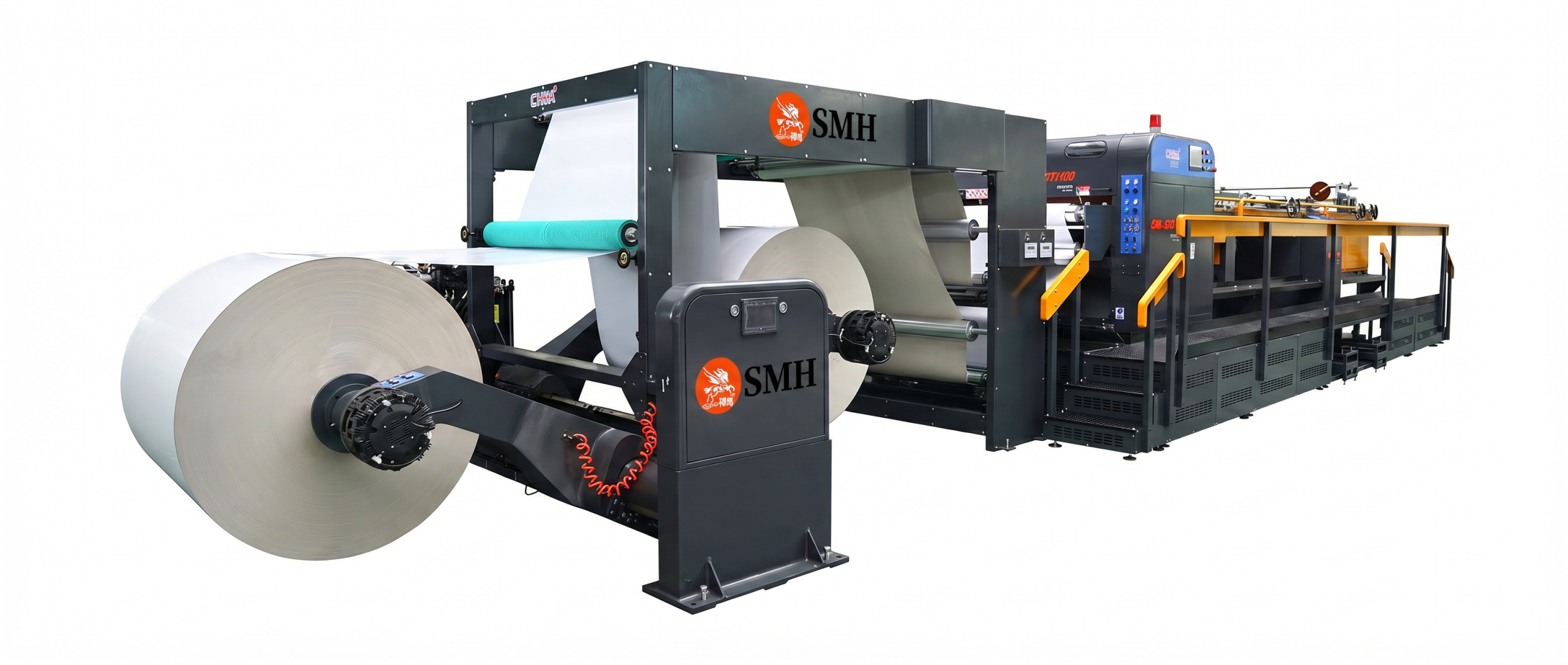

Many paper mills and converters have faced the same situation:
the machine is rated at 400–600 m/min, but in real production, it can only run steadily at 250–350 m/min.
Once the speed goes up, problems start to appear—
vibration increases, noise becomes harsh, paper edges deteriorate, and stacking turns unstable.
This is not a motor issue.
In most cases, it comes down to one thing: machine structure and dynamic stability.
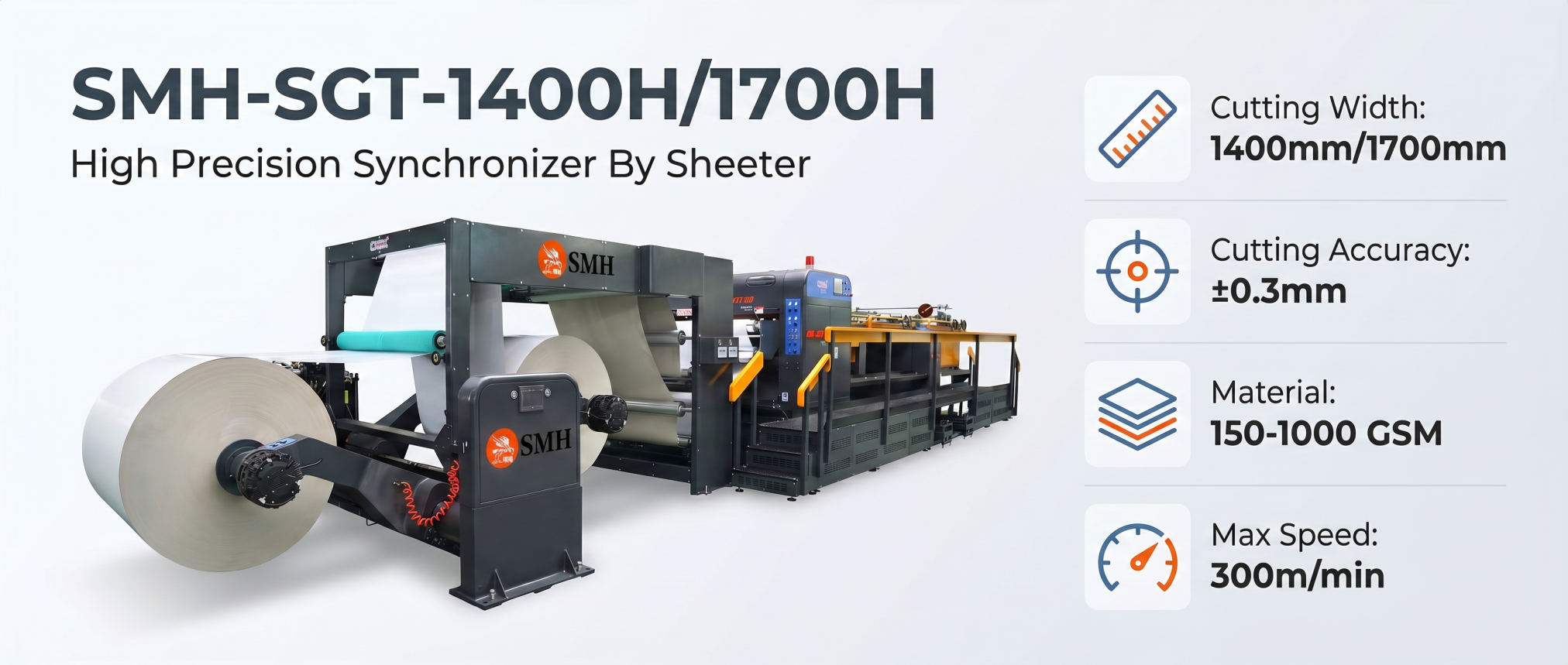
1. Rigidity – The Real Foundation
At high speed, sheeting involves constant tension changes, impact loads, and rotating inertia. If the frame lacks rigidity, even small deformation affects knife alignment, cutting precision, and sheet consistency.
A rigid structure – reinforced side frames and optimized load-bearing design – keeps the cutting system stable at high speed. That’s why SMH heavy-duty sheeters use thicker wall plates and reinforced frames, not just bigger motors.
2. Dynamic Balance – Stability Is Not Static
As the jumbo roll diameter decreases, web tension changes, rotational inertia shifts, and the center of gravity moves. If the machine isn’t balanced, you get:
- Vibration amplification
- Unstable cutting length
- Inconsistent stacking
A well-designed sheeter integrates optimized weight distribution, a stable base, and synchronized drives. In SMH double rotary knife systems, dynamic balance comes from synchronized cutting and continuous motion control, reducing impact forces and improving stability.
3. Cutting System – Where Speed Meets Precision
The cutter is the most sensitive part. At higher speeds:
- Any knife misalignment gets magnified
- Vibration directly causes edge defects
- Impact force jumps
Traditional single knife systems often struggle. Double rotary knife systems (like SMH uses) offer continuous rotary cutting instead of intermittent impact – less vibration, cleaner edges, better high-speed consistency. That’s why machines with the same speed rating can perform so differently.
4. How to Spot “Fake High-Speed” Machines
Three practical checks:
- Machine weight – For the same width, a heavier machine usually means better rigidity.
- Vibration at speed – Excessive shaking on the frame or cutter area? Poor damping and weak structure.
- Sound quality – A stable machine runs smooth and quiet. Sharp noises or irregular impact sounds mean trouble.

Bottom Line
Speed alone means nothing without stability. A machine that only hits its rated speed during testing – but must slow down in real production – doesn’t deliver real productivity.
True efficiency comes from stable high-speed operation, consistent cutting quality, and minimal downtime. That’s why leading manufacturers focus on rigidity, dynamic balance, and advanced cutting systems, not just speed numbers.
Need a stable high-speed sheeter?
If you’re evaluating a new machine or facing stability issues on your current line, SMH can provide practical solutions based on real operating conditions.
Contact SMH for a customized sheeting solution that actually runs at rated speed – without the drama.